




First steps
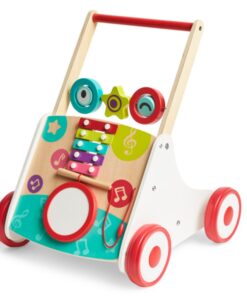
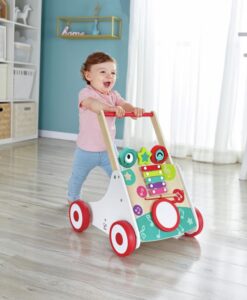


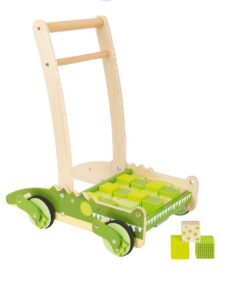
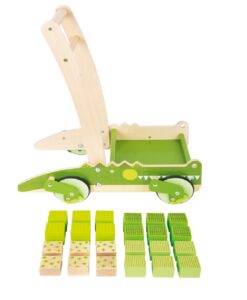
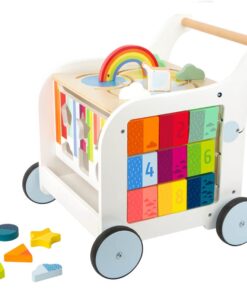
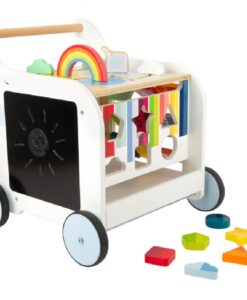
Two very different things get called a “baby walker”. One is the seated walker, where the baby sits inside and scoots along with their feet: paediatricians have advised against it for years. The other is the push-along walker, a cart the baby grips by the handle and pushes while walking on their own legs. We only stock the second.
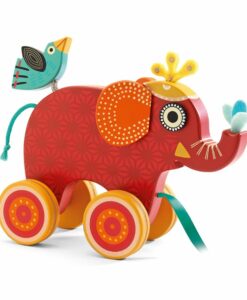
You’ll find wooden push-along walkers with a stable base, plus pull-along toys for once they’re walking, which is the next stage.
It is part of baby motor stimulation, follows on from crawling and continues in on wheels.
Push walkers yes, seated walkers no
The difference isn't brand or price: it's biomechanics. In a seated walker the baby hangs in a fabric seat, pushes with their toes and moves without supporting their own weight. It doesn't train balance — the device replaces it — it encourages toe-walking, and it gives access to speed and heights their development doesn't yet control. That's why major paediatric bodies advise against them, and why some countries have banned them outright.
A push walker does the opposite: the baby stands, carries their own weight, grips the handle with both hands and walks. The cart only provides a front point of support they can let go of as confidence grows. It's a temporary aid, not a substitute.
What to check before buying a push walker
- Wide, weighted base. If the cart tips when leaned on, the baby falls and loses confidence. Stability is criterion number one.
- Brake or resistance wheels. Without a brake, the cart shoots off at the first push and the baby follows. Many wooden models have an adjustable screw to slow the wheels: tighten it at first.
- Handle height. Hands should sit at chest height, not above the shoulders. If the baby has to reach up, they overbalance backwards.
- Multi-use design. Multifunction walkers have sorters, an abacus or gears on the front panel, so they're used sitting before walking and standing afterwards. That greatly extends the product's life.
From push to pull
Once a child walks unaided, pushing stops being interesting and another stage begins: pulling. An animal on a string behind them means looking backwards while moving forwards, which is considerably harder than it sounds. They have to hold balance while rotating the trunk, judge space and anticipate an obstacle they aren't looking at.
It's also a game with real symbolic weight — the animal "is" a pet following them — so it links naturally to pretend play. And it generates plenty of language: naming, calling, giving the animal instructions, narrating where it's going.
Frequently asked questions about first steps
What age do babies start walking?
The normal range is wide: most between 11 and 15 months, and it's still considered expected up to 18. Before that comes a phase of pulling to stand on furniture and cruising sideways, which is what genuinely prepares walking.
Are baby walkers bad for babies?
It depends which kind. Seated walkers, with the baby sitting inside, are advised against by paediatric bodies: they don't promote walking, they're associated with falls, and they can encourage toe-walking. Push-along walkers, gripped while standing, don't share that problem because the child supports their own weight and genuinely walks.
When can a baby use a push walker?
Once they pull to stand on furniture and cruise sideways, usually around 9-12 months. Before that it's no use to them. Keep the wheels braked at first so the cart doesn't run away from them.
Is it better for babies to walk barefoot?
Indoors and on a safe surface, yes: bare feet receive information from the floor and the muscles work harder, which helps form the arch. Firm-soled shoes are for outdoors, and they should be flexible and light rather than "supportive".