




Swallowing and feeding



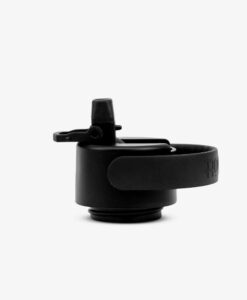
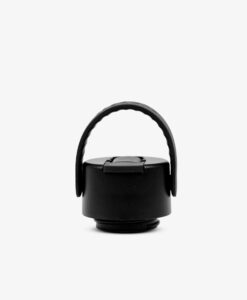
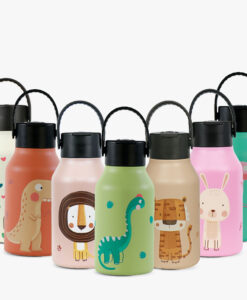
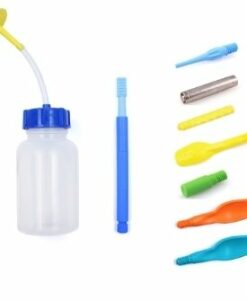
Children’s Insulated Bottle – Runbott


Insulated Bottle – Runbott
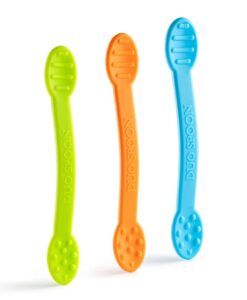
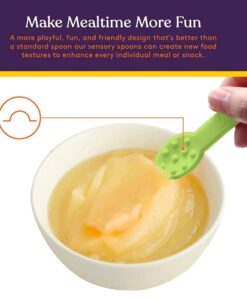
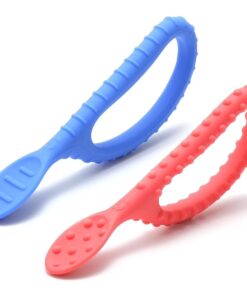
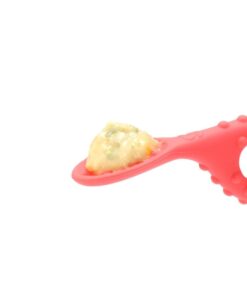
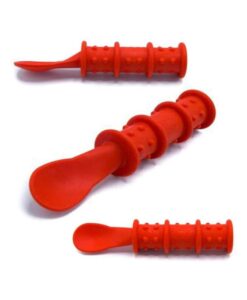

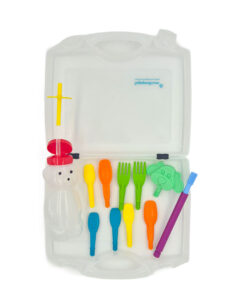
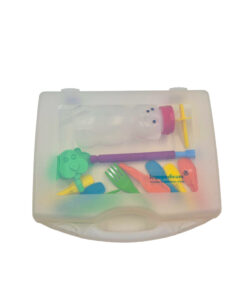


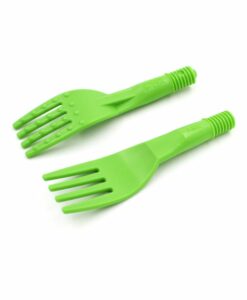
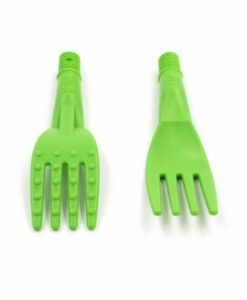
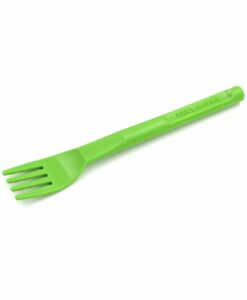
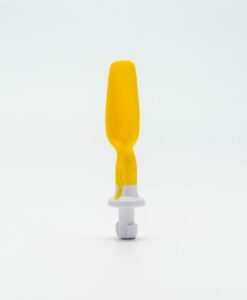
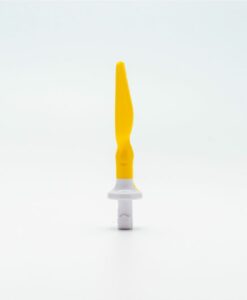
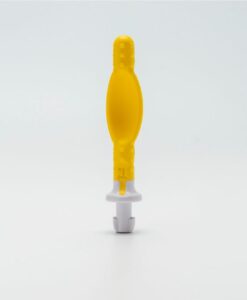
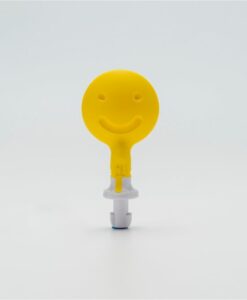
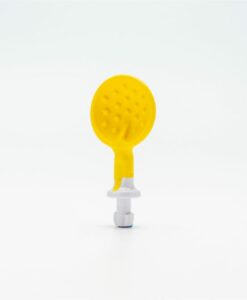
Z-Vibe fork tip
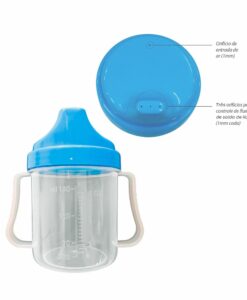

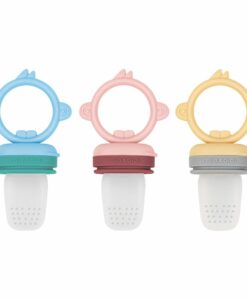
Silicone chewing net – Pulps
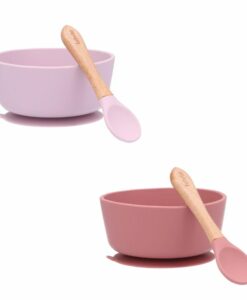
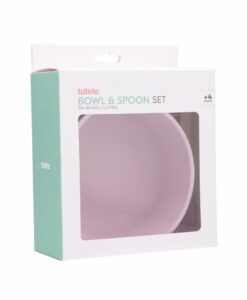
Bowl with suction cup and spoon
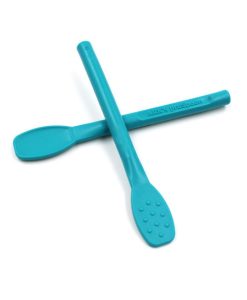
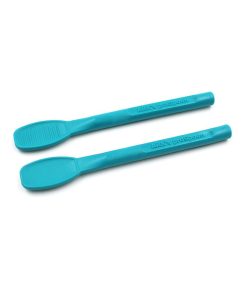
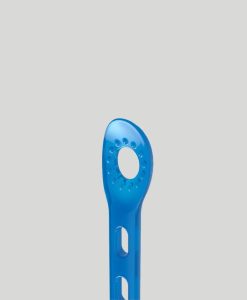
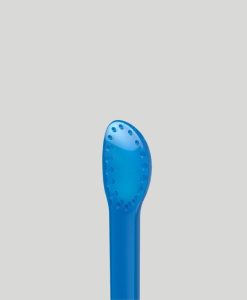
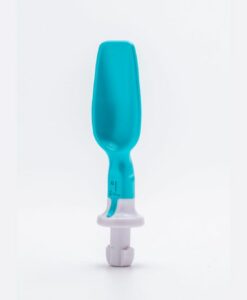
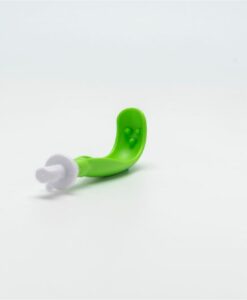
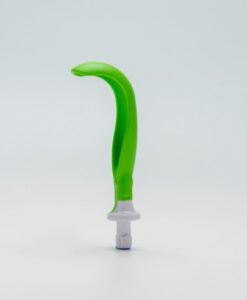
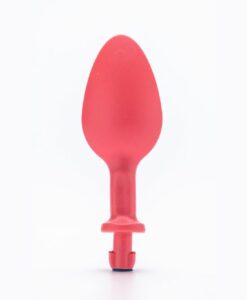
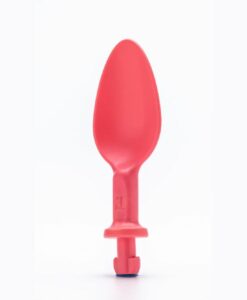
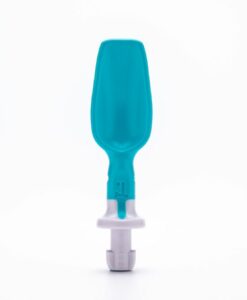
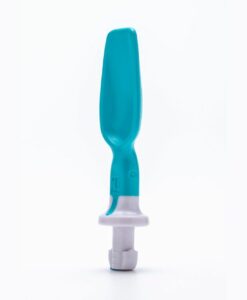
Ark flat spoon
Swallowing well is not learned in one go. It is built by moving from the infant suckling pattern to the mature pattern, where the tongue rests against the palate and propels backwards without the lips or jaw having to compensate.
When that transition does not complete, you get tongue thrust: the tongue pushes forward, sits between the teeth, and keeps bite and articulation problems going.
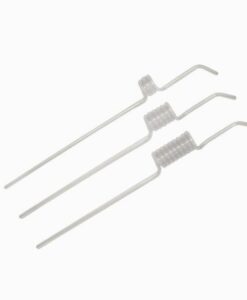
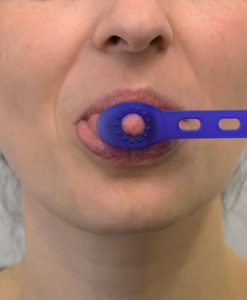
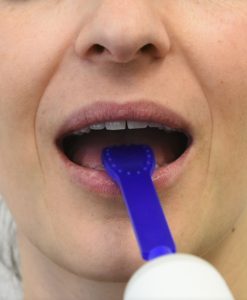
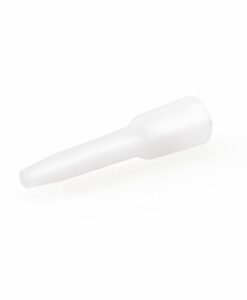
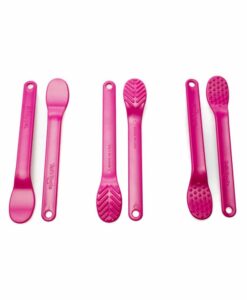
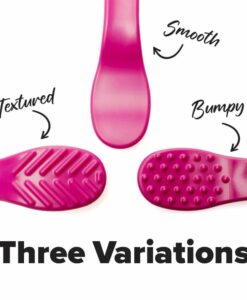
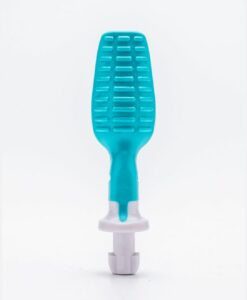
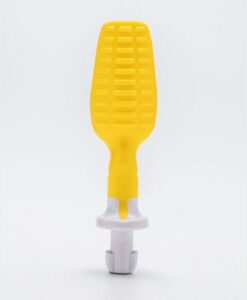
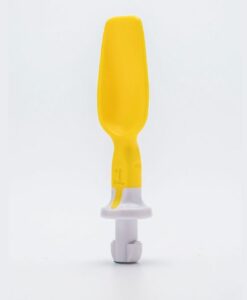
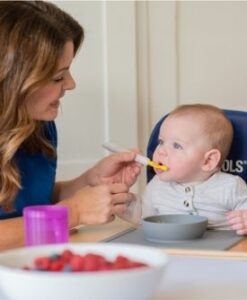
Therapy spoons. Flat spoons, textured spoons, the dual-texture spoon, the Duo Spoon Loops pack, and spoon tips for Z-Vibe and Novafon — Hard Spoon, Hard Textured, Training Spoon, Sensory Spoon — which bring vibration into the mealtime itself.
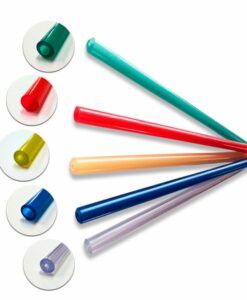
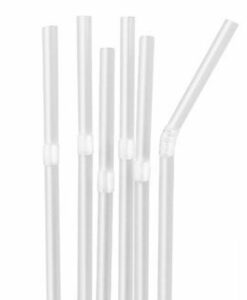
Cups and transition. Flow-reducing cups, flexible cups with replacement tubing, bear cups, one-way valves and straws in a range of diameters. This is the route from bottle to open cup without going through a hard spout, which reinforces the immature pattern.
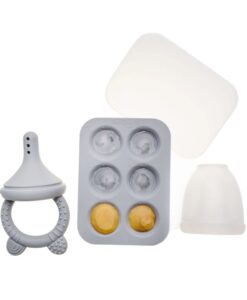
Feeders. b.box silicone feeder and tray feeder, for introducing flavours and textures safely.
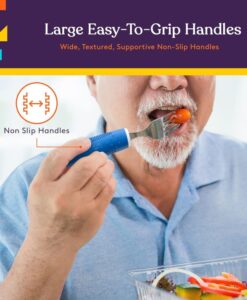
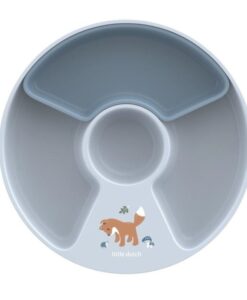
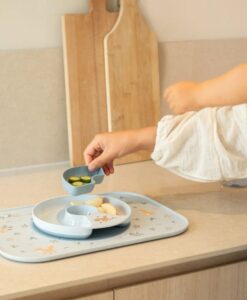
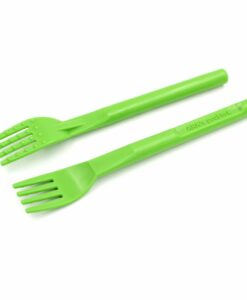
Cutlery and plates. Ark textured forks, wide-handled ergonomic cutlery, compartment plates and suction bowls.
Recording. Payne Technique swallow recording block, to document the pattern before and after.
The musculature behind the swallow is trained in lips, tongue and more and chewing. Preparatory vibration is in vibration. If the patient is an adult or there is aspiration risk, the equipment is in dysphagia.
What tongue thrust is
A swallowing pattern in which the tongue does not rest against the palate but pushes forward or sideways, often with the lips and chin musculature joining in.
We swallow around 600 times a day. An incorrect pattern repeated 600 times daily for years applies constant force to the teeth, and that force eventually moves them.
This is why tongue thrust is not only a speech therapy matter: it usually turns up alongside open bite, crossbite or relapse after orthodontic treatment.
The order of the transition
Suckling (0-6 months)
A reflexive pattern. The tongue moves front to back and the lips seal around the nipple or teat.
Spoon (from 6 months)
The first big change. The child has to clear the spoon with the upper lip rather than suck. A flat spoon forces that movement; a deep bowl lets them keep sucking and delays the change.
Open cup (8-12 months)
This is where the transition stalls most often, because a hard spout is convenient and maintains the suckling pattern. Flow-reduced and flexible cups make the step possible without overwhelming the child.
Mature pattern (from 3-4 years)
The tongue rests on the papilla, the tip does not touch the teeth and the jaw stays stable. That is the target.
Why the spoon matters more than it looks
The shape of the bowl dictates the movement. A deep spoon lets the child suck the contents off; a flat spoon makes them bring the upper lip down and clear it.
That detail — which costs very little — is the difference between reinforcing the immature pattern and training the mature one three times a day, every day, with no session required.
Common questions
At what age is tongue thrust addressed?
Usually when there is enough maturity to cooperate with exercises, around 5-6 years, unless an orthodontic indication suggests starting earlier. Before that, work focuses on habits and breathing.
Can it be corrected without orthodontics?
It depends whether structural change has already happened. If it has, myofunctional work runs alongside orthodontic treatment and prevents relapse; without it, the tongue moves the teeth back.
Do vibrating spoon tips help with feeding?
Yes, and they are particularly useful with children who have limited oral sensory awareness or food refusal. Vibration during the mouthful helps them register what is there.