




Puzzles and laces



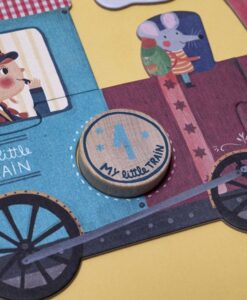
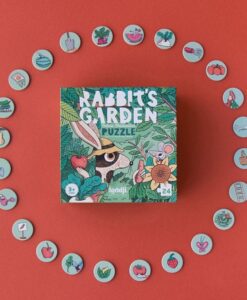
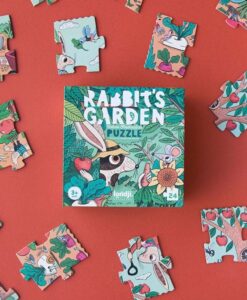
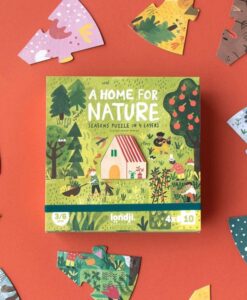
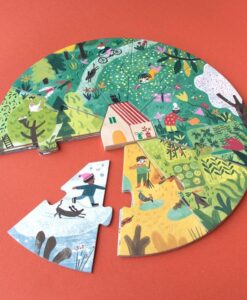


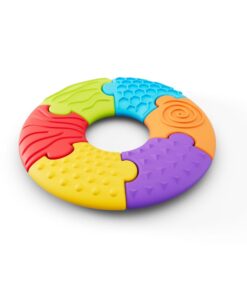


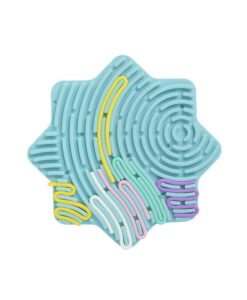

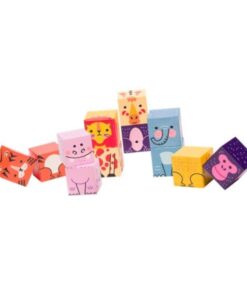


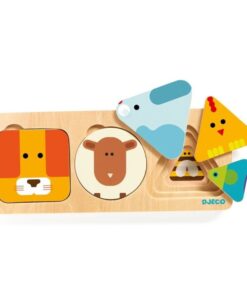




A puzzle does not only train the eyes. Placing a piece means looking at the gap, rotating the hand and predicting whether it will fit: perception, fine motor skills and planning at once. And while it happens, there is talk —«where does the rabbit go?», «not that one, it’s bigger»— and that is where a puzzle becomes a language tool.
These are the children’s puzzles and inset boards, sorted by what each one asks of the child: from the first single-piece board with a knob to observation puzzles with a full scene. There are wooden, flexible silicone, magnetic and floor versions.
It is part of type of toy, alongside learning games.
The progression, from first piece to full scene
- Simple inset boards. One shape, one gap. The piece fits one way only, which makes failure impossible. This is the real first step.
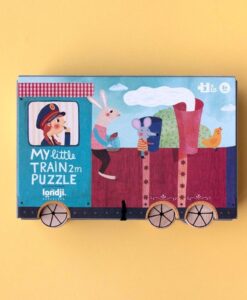
- Two-piece puzzles. The «duo» sets: two halves that find each other by colour or by animal. This is where the idea appears that one thing completes another.
- Progressive puzzles. Series running from 2 to 3, 4 and 5 pieces inside the same box. They let you raise the level without buying another toy.
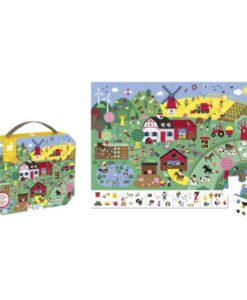
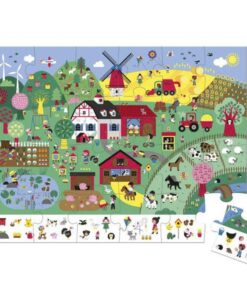
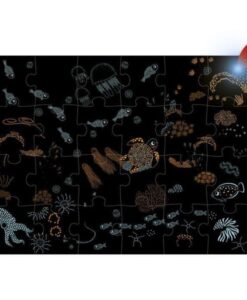
- Observation puzzles. Detailed scenes, farm or garden. It is no longer about fitting pieces: it is about searching, naming and telling what is happening.
- Giant floor puzzles. Built standing up, with the whole body. Good for group work, or for a child who cannot stay seated at a table.
Which material to choose
Wood for durability and weight: the piece stays where you put it and gives the hand better feedback. It is the clinic and classroom option.
Flexible silicone —Flexhetti-style— when the puzzle will travel, get wet, or be used by someone who still mouths materials. It does not splinter and it washes.
Magnetic —Ima Cube cubes and farm animals— when you need pieces to stay put: it can be played with in the car or on a sloped surface.
How it is used in speech therapy and in class
Vocabulary and description. An observation puzzle offers twenty new words without feeling like a worksheet. You ask about what is there to see, not about what fits where.
Sequences and routines. Routine puzzles and four-seasons puzzles put time in order: first, then, finally. That is the foundation for recounting something that has already happened.
Categories. Animals, vehicles, jobs. Sorting before building turns the puzzle into a classification exercise.
What age do puzzles start at?
With knobbed inset boards, around 18 months. Two-piece puzzles usually work from age 2, and observation puzzles from 3 to 4. More than age, the hand decides: if the piece slips while being placed, the puzzle is still too big for them.
How many pieces is the right number?
As many as they can finish unaided in one sitting. A puzzle that never gets finished teaches nothing and discourages; one finished in ten seconds does not teach either. A good puzzle is one that takes a little effort.