




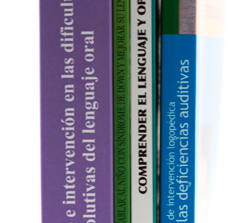

A good speech therapy book doesn’t get read cover to cover: it gets consulted. You open it at the chapter matching this week’s case, pull out a progression table, and close it again.
Which is why they’re sorted by clinical area rather than by publisher or date. 247 titles across six sections, so you reach the one that solves your case without working through the whole catalogue.
The six sections
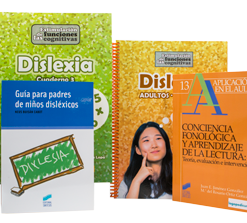
Reading and writing
The largest, with 74 titles. Dyslexia, phonological awareness, reading comprehension and learning difficulties.
Hearing and language
67 titles on language development, DLD, semantics, morphosyntax and pragmatics. The bibliographic core of the profession.
Other books
65 titles that don't fit the other five: cross-cutting material, general works and specific topics.
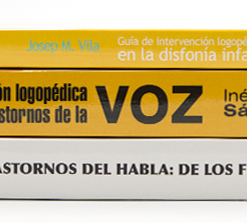
Speech and voice
39 titles on articulation, dysphonia, vocal rehabilitation and technique.
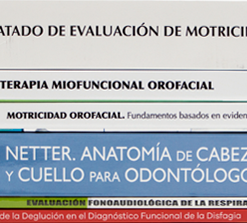
Orofacial myology
32 titles on myofunctional therapy, swallowing, dysphagia and orofacial assessment. The busiest section in this branch.
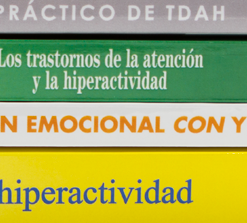
ADHD and neurodevelopment
11 titles on attention, executive function and neurodevelopmental profiles.
→ See ADHD and neurodevelopment
Textbook, workbook or programme: not the same thing
A textbook is the underlying reference: theoretical framework, evidence and rationale. You buy it once and it lasts a career.
A workbook is session material: worksheets, plates and exercises ready for Monday. It gets used up.
An intervention programme sits between the two: a full sequence with objectives, activities and progression criteria.
The usual mistake is buying a textbook expecting worksheets, or a workbook expecting rationale. Each product page says which is which.
The books also live in their clinical category
The same title appears here and in the category of the area it covers. That isn't an oversight: they're two ways of searching. If you arrive with a specific case — a dysphagia, a DLD — start from the clinical category, where the book sits next to the equipment that goes with it: orofacial myology, language or learning.
Frequently asked questions
Do you supply libraries and training providers?
Yes, with an invoice and a quote in advance. For multi-title orders we can prepare a priced list before you process it.
Which book should I start with?
It depends on the area, but the rule that works is starting with a core textbook in the field you'll be working in, then adding workbooks as cases come up. Doing it the other way round leaves you with material and no rationale.