



Orofacial myology works on the muscles that move the lips, tongue, jaw and soft palate — the same ones involved in speaking, chewing, swallowing and breathing. When one of them stops doing its job, the rest follows in a chain.
This is the equipment a speech therapist needs to work on that chain, sorted by what you do with it rather than by brand.
Assess before you treat. Exploration and diagnosis holds the measuring tools: calipers, dermographic pencils and protocols to record the baseline.
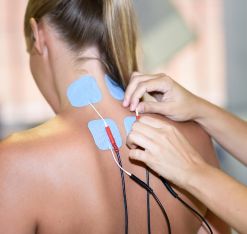
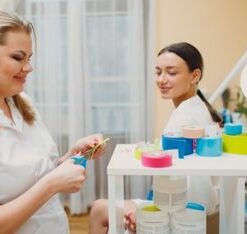
Stimulate tone. Vibration wakes the musculature before exercise; electrostimulation targets specific muscle groups, and neuromuscular taping keeps the input going between sessions.
Train the function. Chewing for the jaw, lips, tongue and more for oral praxis, and breathing for the respiratory pattern.
Rehabilitate. Swallowing and feeding for children in therapy, dysphagia for adults and older people, and laryngectomy for post-surgical rehabilitation.
Correct and balance. Harmful habits and generalization for thumb sucking and mouth breathing, and facial aesthetics and thermotherapy.
What orofacial myology covers
It is the area of speech therapy concerned with orofacial functions: breathing, sucking, chewing, swallowing and speech. It does not treat sound articulation in isolation — it treats the muscular system that makes all of them possible.
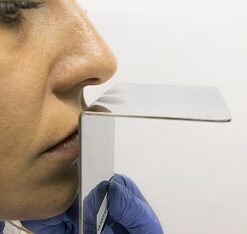
An example explains it better than a definition. A child who breathes through the mouth keeps the tongue low and forward instead of resting against the palate. Over the years that posture reshapes the palate, changes the bite, alters the swallowing pattern and eventually affects how certain sounds are produced. The problem did not start with speech. It started with breathing.
Choosing tools by stage of intervention
Assessment
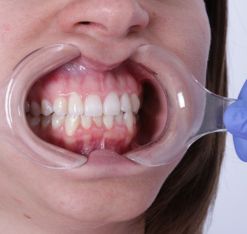
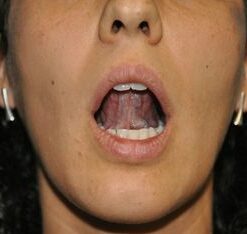
Without measurement there is no demonstrable progress. Calipers and dermographic pencils let you record ranges and mark reference points on the skin, then repeat the measurement weeks later under the same conditions.
Preparing the muscle
Vibration and thermotherapy are used before exercise, not instead of it. They prepare the tissue so the active work pays off.
Active work
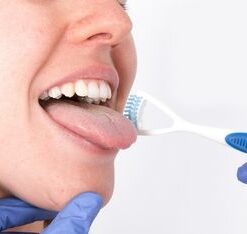
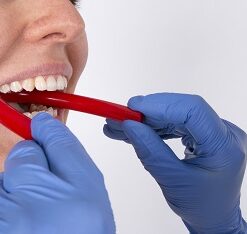
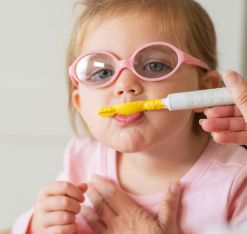
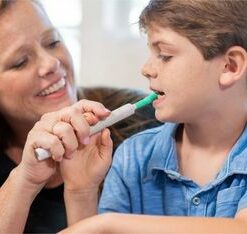
This is where chewy tubes, tongue and lip exercisers and oral praxis tools come in. It is the part that produces change.
Carryover between sessions
Neuromuscular taping and prescribed home exercises hold the gains when the patient is not in front of you.
Children and adults
With children the focus is developmental: sucking habits that persist, mouth breathing, atypical swallowing, chewing difficulties. Tools tend to be smaller and more playful.
With adults the focus is rehabilitative: dysphagia after a stroke, surgical sequelae, facial palsy, or aesthetic and tone work. The size changes, the protocol changes and the pace changes.
Common questions
Do I need specific training to use this equipment?
For assessment tools and active exercise equipment, a speech therapy qualification is enough. Electrostimulation and neuromuscular taping do require specific accredited training: they are techniques with contraindications.
Can it be used at home?
Much of it can, under a professional's guidance. Chewy tubes, exercisers and therapeutic chews are designed to be used outside the session too.