




Morphology and syntax
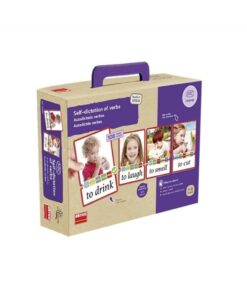







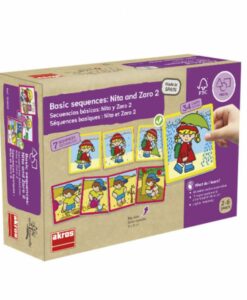
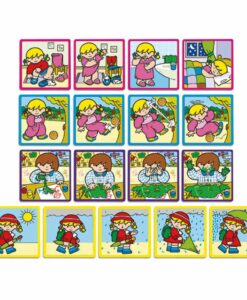
Nita and Zaro basic sequences








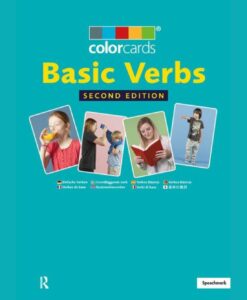
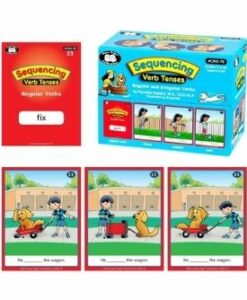
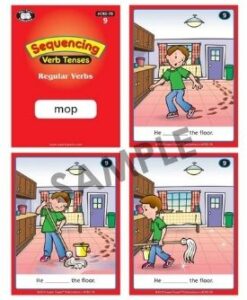

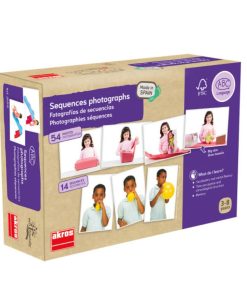

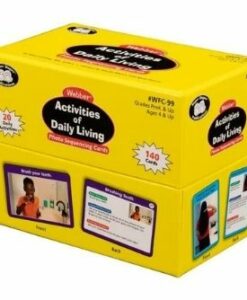
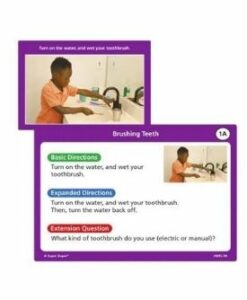

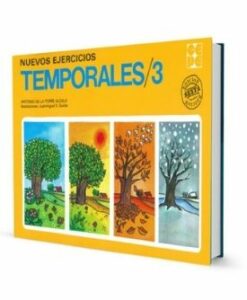
New temporary exercises
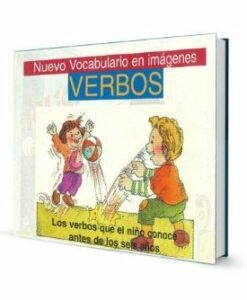


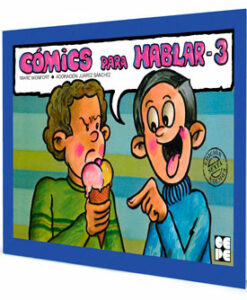
Cómics para Hablar

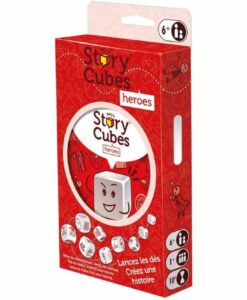
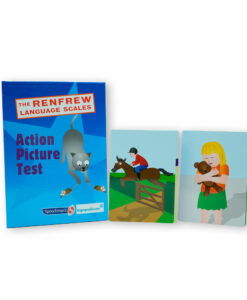
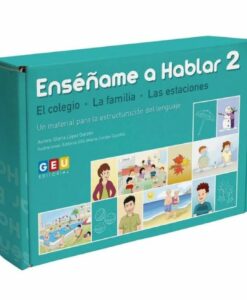
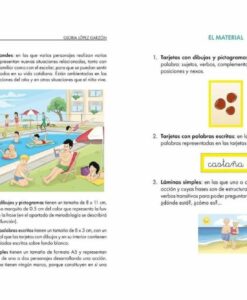


Enseñame a hablar


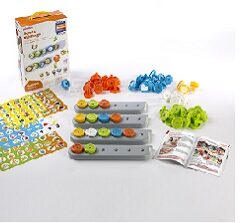
Learn with bits: Time sequences

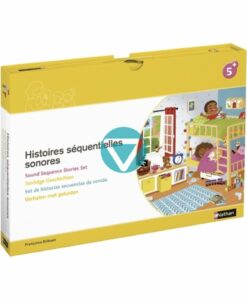



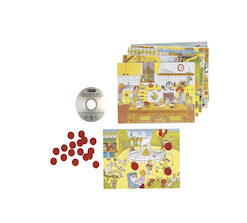

A client can know every word in a sentence and still not build it. Morphosyntax is the part of language that handles that: what form each word takes and what order they go in.
Here you’ll find material for agreement, verb inflection, connectives and sentence structure, from the two-element phrase to the subordinate clause. It includes the workbook series many clinics use as the backbone of a session.
What morphosyntax work covers
Gender and number agreement
The most visible error and the first one addressed. Matching and correction material with visual support.
Verb inflection
Tense, person, irregular forms. This is the block that eats the most session time, and where graded material earns its keep over loose worksheets.
Connectives
Because, although, while, however. Moving from juxtaposition to subordination is the jump that separates child language from adult language, and it's worked through sequences and sentence completion.
Sentence structure
Word order, progressive expansion of the utterance, passives and subordinate clauses. Sentence-building boards and ordering material.
Morphology and syntax workbooks
A good part of this category is publisher series designed for systematic work with a built-in difficulty progression. They're the usual choice when you need to cover the whole block rather than a single objective, and they work equally well in clinic and in a language support classroom.
Frequently asked questions
What exactly is morphosyntax?
It's the combined study of morphology — how word forms change for gender, number, tense or person — and syntax — how those words are ordered in the sentence. They're treated together because in clinical practice they can't be separated: an agreement error is morphological and syntactic at once.
At what age does morphosyntax intervention start?
Structured work usually begins around age 4, once the three-element phrase is in place and agreement can reasonably be expected. Before that, intervention aims at increasing mean length of utterance, which leans more on semantics.
Is this material suitable for DLD?
Yes, that's one of its main uses. Developmental language disorder characteristically affects morphosyntax, and graded material with visual support is the standard approach. See also ASD if you're looking for material adapted to profiles with associated communication difficulties.