




Family games
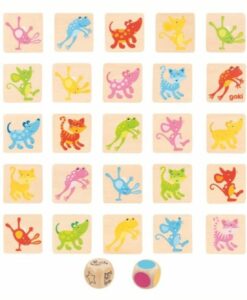
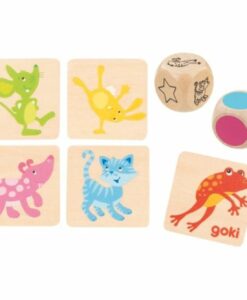












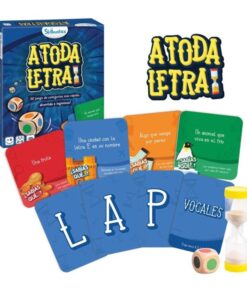
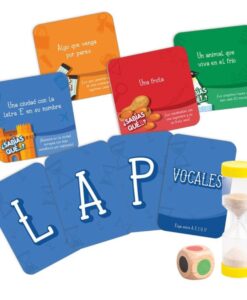




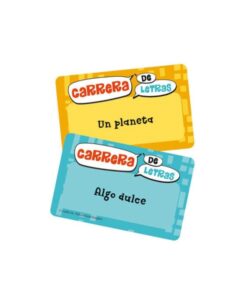
Carrera de letras



The problem with family game night is rarely a shortage of games. It is that the ones you own only work if everyone is the same age: either the child is bored, or the adult is, or someone has to lose on purpose and it shows.
These are the ones that solve it: family board games where an eight-year-old can beat an adult fair and square, in fifteen or twenty minute rounds. Speed, observation, quiz, cards and bingo.
Part of toys by age, overlapping with 9 to 12 and also for adults.
What makes a game work across mixed ages
Not being "for all ages", which is printed on nearly every box. Three specific mechanisms, and they are visible on the box once you know to look:
The skill it measures shouldn't depend on age. Reaction speed, visual search and visual memory are fairly evenly spread: an eight-year-old beats a parent quite naturally. Vocabulary, arithmetic and strategy depend on years lived, and there the adult either dominates or has to throw it.
Enough luck. Luck levels the field without anyone pretending. A game with zero luck is a game where the best player always wins, which is unsustainable with a seven-year-old.
Short rounds. If a round lasts three minutes, whoever lost plays again straight away. If it lasts an hour, whoever is losing spends fifty minutes knowing it.
The three formats that never fail
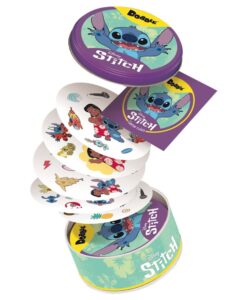
- Speed and observation. Spotting something before everyone else. The most levelling format there is, and the one that best survives mixed ages.
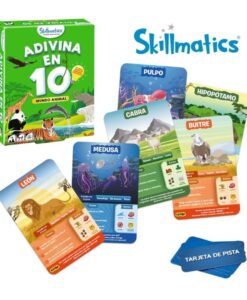
- Team quizzes. Mixing generations within each team, so the child brings what they know and the adult brings what they know. Far better than one against the other.
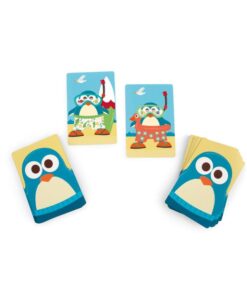
- Card games. Pocket-sized, playable in a café or on a train, done in five minutes.
What is actually happening while you play
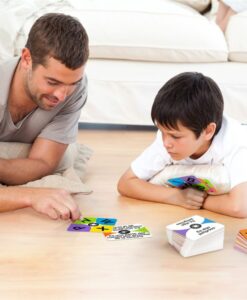
Worth saying even though it sounds obvious: a board game is one of the few situations where a family looks at each other's faces for a sustained stretch. And for a child with language or attention difficulties it is the best working context there is, precisely because it doesn't look like one.
A round requires waiting your turn, following a rule, tolerating losing, reading someone's face and narrating what happened. Those are all objectives from a speech or occupational therapy session, and here they happen by themselves.
One practical note: the adult should play properly. Being let win is always detected, and it removes the only thing that makes winning worth anything.
Frequently asked questions
Which board games work for children and adults together?
Speed and observation games, because they measure something that doesn't improve with age. Quizzes too, played in mixed teams. Avoid pure strategy and vocabulary games when younger children are playing: the adult wins every time and the game dies on its own.
How long should a family game last?
Fifteen to twenty minutes. That is the length that lets you play on a weeknight rather than only on Sundays, and the one that makes the loser want another round. Long games get bought enthusiastically and opened twice a year.
What age can children join in?
From four or five with very simple colour-and-luck games, and from six or seven with almost any short game. Before four the obstacle is not understanding rules — it is waiting a turn and accepting a loss, and both arrive later.
Do board games help language development?
A great deal, and quite naturally. They require asking, protesting, negotiating, explaining a rule and recounting what happened, all with genuine motivation. That is why they are used so heavily in speech therapy: the child talks because they want to win, not because they were asked to.