




Pikler
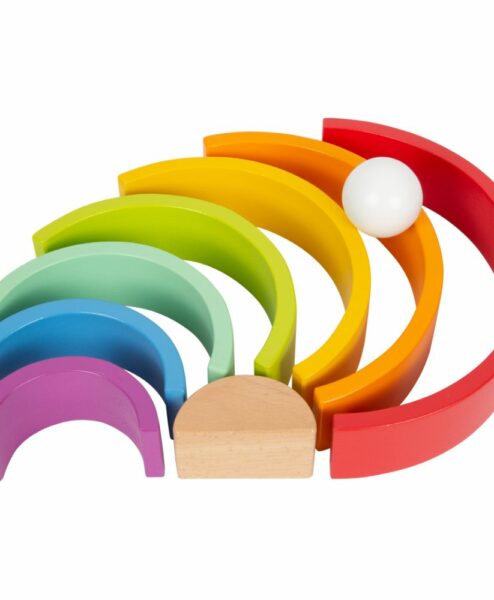

Wooden rainbow XL
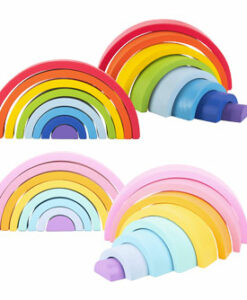
Medium wooden rainbow


A climbing triangle does not teach a child to climb. It works the other way round: it is there so the child climbs when their body is ready, with nobody lifting them up, down or into position. That distinction, which sounds like a detail, is Emmi Pikler’s whole approach in a single object.
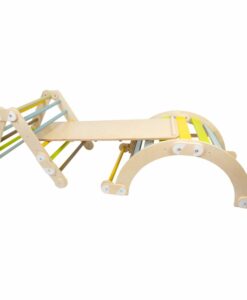
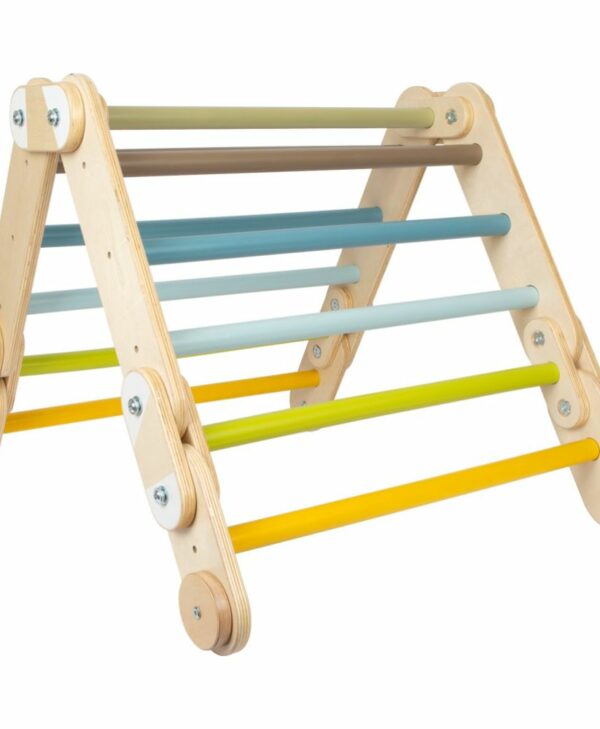
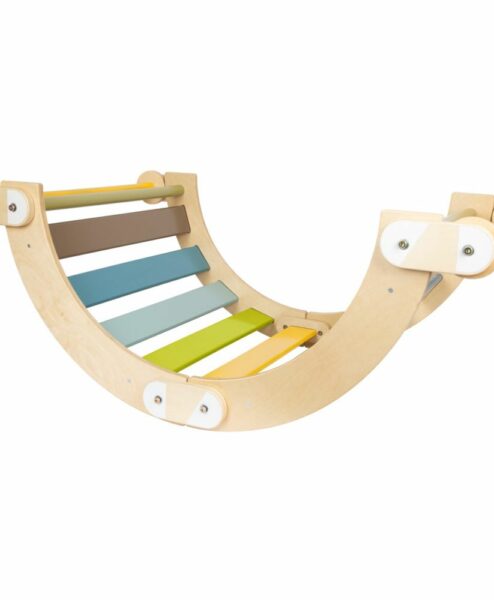
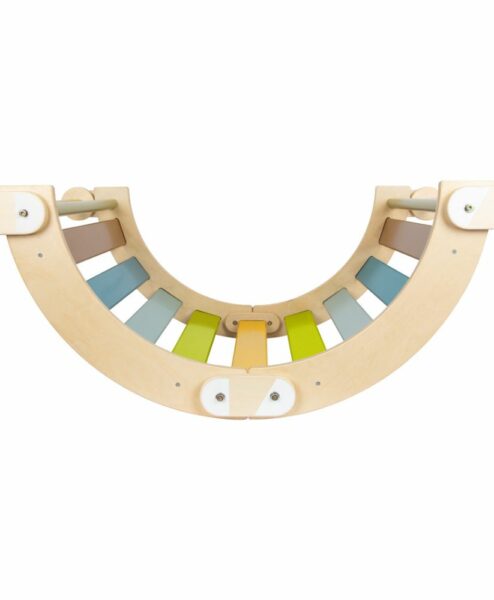
Here you will find free movement material: a foldable Pikler triangle, a three-way slide board and a climbing rocker, all in wood and designed to be left set up.
It is part of toys by pedagogy and shares its idea of autonomy with Montessori, applied here to the body rather than the hand.
What free movement means, and why it changes so much
Emmi Pikler was a paediatrician in Budapest who reached a conclusion that was uncomfortable at the time: motor development does not need teaching. A baby who is not positioned, propped up or stood up reaches every milestone anyway — and arrives with something the other child lacks, which is knowing how they got there.
The practical consequence is specific, and it takes some accepting: do not sit up a baby who cannot sit, do not stand up one who cannot stand, do not lift a child onto the triangle. You prepare a safe space and safe material, and you wait.
What the waiting buys is a child who can gauge what they are able to do. A child who gets lifted ends up somewhere they cannot get down from; a child who climbed up alone can climb down alone, because they built the route. In practice that means fewer falls, not more.
The triangle: how it is actually used
Put it on the floor, open, and do nothing else. That is the entire protocol, and it is harder to follow than it sounds, because the urge to help is constant.
- 6-9 months. Grips the rungs to pull up. Not climbing: using it as support.
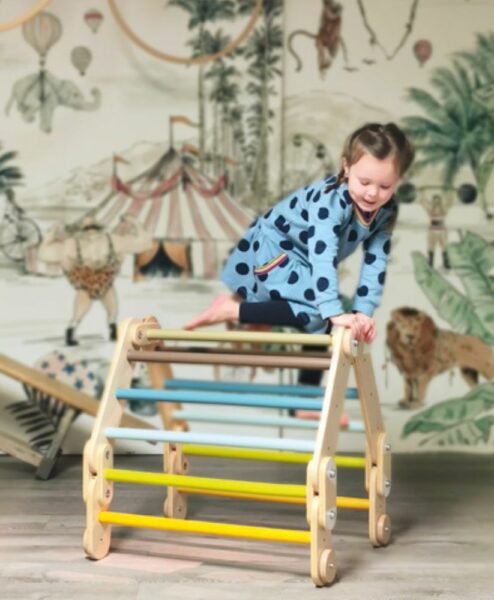
- 10-14 months. Climbs one or two rungs and comes back down. Many times a day, always the same. Exactly as it should be.
- 15 months-2 years. Climbs the whole thing, goes over the top, down the other side. The ramp appears.
- 2-5 years. The triangle stops being a triangle: it is a den, tent, boat or slide with a cloth over it.
Two things worth knowing. First: folded, it stores flat, and that decides whether it stays in the living room or ends up in the garage. Second: the rungs must allow a child's hand to grip fully — neither too thick nor too far apart.
The slide board and the rocker
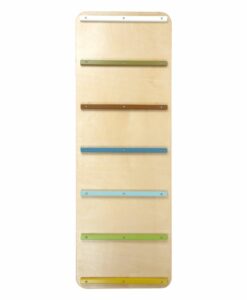
The 3-in-1 board is what makes the triangle last for years. One way up it is a smooth slide; flipped, it is a climbing ramp with rungs; laid on the floor, it is an incline for crawling. Three different motor activities in one object.
The climbing rocker adds what neither the triangle nor the board provides: vestibular work. Rocking tells the inner ear where the head is, and that system underpins balance and a good deal of attention. Turned over, it becomes a cave and a bridge.
Safety, without panic and without complacency
The most common question is whether it is dangerous, and the honest answer is that the risk sits with the adult, not the equipment. A child who climbs unaided does not go higher than they can manage.
What does need securing: a soft or at least non-hard surface beneath, clear space around, splinter-free wood and stability when opened. And supervision, which is not the same as help: watching yes, positioning no.
Frequently asked questions
What is a Pikler climbing triangle?
A wooden triangular frame with rungs, designed for a child to climb on their own initiative. It comes from paediatrician Emmi Pikler's free movement approach: the adult does not position the child or teach them to climb, only prepares the space and observes.
What age can it be used from?
From around 6-9 months as something to pull up on, and for climbing from whenever the child climbs unaided. There is no fixed starting age because age is not the criterion — climbing without help is. If you have to lift them on, it is not time yet.
Does it take up a lot of space?
Open, yes, but foldable models store flat against a wall, which solves it for most homes. Worth checking the fold is a real one before buying: some models only half fold and still take up room.
Is Pikler the same as Montessori?
They share the idea of autonomy but cover different ground. Montessori focuses mainly on hand activity and materials with a defined use; Pikler focuses on whole-body movement and on not interfering with motor development. They combine well and often coexist.