







This is not a nursery section like any other. It is the baby range of a speech therapy shop, and that changes the criteria: we look at how an object affects the mouth, the hand and the relationship with the adult. A cup is not just a cup —depending on how a child drinks, the tongue works one way or another— and a teether is not only relief: it is oral exploration.
It is organised by moments of the day and by developmental milestones:
- Baby feeding: tableware, bibs, baby-led weaning, breastfeeding and accessories.
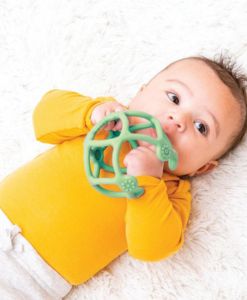
- Teethers: first teethers, cold teethers and teething toys.
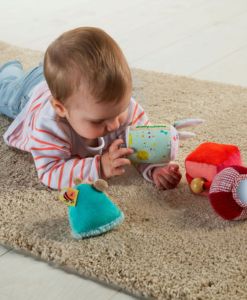
- My first toys: what gets grabbed, shaken and looked at in the first months.
- Motor stimulation: crawling, first steps, balance.
- Child sleep: light, music and comfort objects.
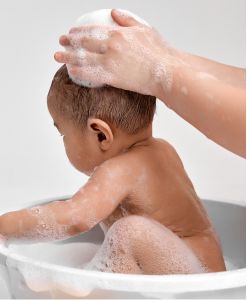
- Bath and hygiene: oral and nasal hygiene, potties, bath toys.
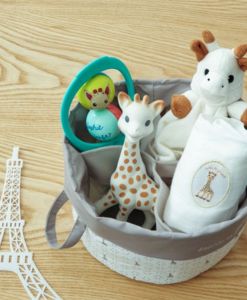
- Original details and gifts: for a newborn.
Why a speech therapy shop sells baby products
Because the first year is where almost everything we later work on in clinic gets set up. Sucking, swallowing, chewing and first sounds all share the same musculature, and what a baby does with their mouth between 0 and 24 months leaves its mark on how they will speak and how they will eat.
That does not mean you need therapy equipment to raise a healthy baby. It means that if you are going to buy a cup, a teether or a spoon, you can choose the one that supports that process best.
What do you actually need, and what can you skip?
Less than it looks. For feeding, a stable plate and a cup with the right rim will cover months. For teething, two or three different teethers. The rest is convenience, and it is worth knowing that before filling the house.
What if my baby struggles to feed or to suck?
Then it is not a product question but an assessment one. Clinical material sits in orofacial myology, but the first step is having a professional look.