




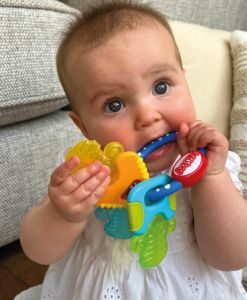
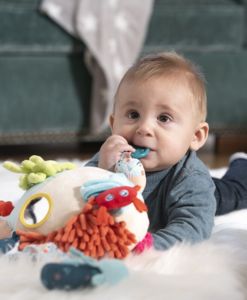
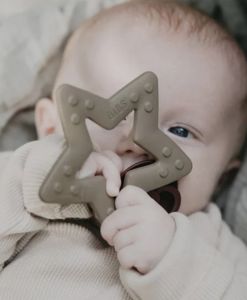
Baby teethers soothe the discomfort of teething and accompany a stage when little ones explore the world with their mouth. A good teether calms the gums, supports self-regulation and helps the baby discover textures, shapes and temperatures safely.
At logopedicum we bring together teethers in food-grade silicone, natural rubber and untreated wood, from brands such as Nûby, Bibs, Little Dutch, Nattou or Haba. BPA-free materials, easy to clean and designed for small hands and sensitive gums.
Here you’ll find the different families of teethers depending on the baby’s stage and needs. If you’re looking for chew tools for orofacial motor therapy (speech therapy), those are in the chewing category.
Why babies need a teether during teething
The arrival of the first teeth, around 3-6 months, creates pressure and inflammation in the gums. Biting a safe object relieves that discomfort, calms the baby and satisfies their need to put everything in their mouth. Handling a teether also stimulates hand-to-mouth coordination and sensory exploration, foundations of development in the first months.
Types of baby teethers
Every baby and every stage calls for a different teether. These are the families you'll find:
- First teethers: lightweight and easy to grip, ideal for the youngest.
- Cold teethers: chilled in the fridge to soothe inflamed gums with the cold.
- Teether toys: combine teether and play, with textures, sounds or colours that entertain.
Materials and safety
The most recommended teethers are made of food-grade silicone, natural rubber and untreated wood, all BPA-free and free of toxic substances, since the baby constantly puts them in their mouth. Choose a size that poses no choking risk, check there are no loose parts and clean them frequently following the manufacturer's instructions.
Baby teether or therapeutic chew tool?
They are not the same. A baby teether soothes teething and supports oral exploration in the first months. A therapeutic chew tool is used in speech and orofacial motor therapy to train chewing in older children or those with difficulties. If that's your case, visit the chewing category, where you'll find tools such as those from Ark Therapeutic, Chewytubes or Talk Tools.
Frequently asked questions about baby teethers
From what age can a baby use a teether?
Generally from 3-4 months, when teething begins and the baby puts everything in their mouth. Choose shapes and sizes suited to their hands.
Which teether materials are safest?
Food-grade silicone, natural rubber and untreated wood, BPA-free. They are easy to clean and bite-resistant.
What's the difference between a baby teether and a therapeutic chew tool?
A teether soothes teething; a therapeutic chew tool (orofacial motor skills) is used in speech therapy to work on chewing. For those products, see the chewing category.