




Cold teethers
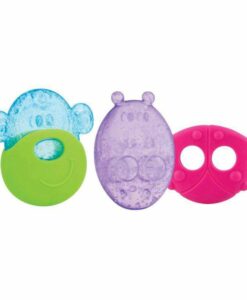
Cold teether with cover – IcyBite
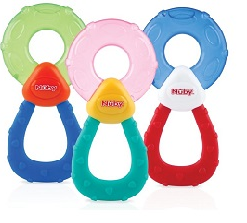
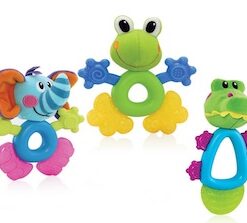
Multisensory teether – cold
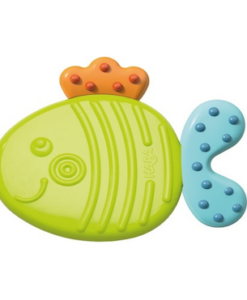
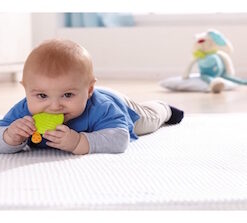
Cold is the only thing that genuinely soothes an inflamed gum, and it does two jobs at once: it reduces the inflammation and slightly numbs the area. So a cooling teether isn’t just a teether with an extra feature: it’s a tool for one specific, fairly gruelling moment.
Here you’ll find water- or gel-filled teethers to chill in the fridge, with a handle so the baby can hold them and a sleeve to protect the adult’s hands.
They are part of teethers.
Fridge yes, freezer no
This is the important part, and the part almost nobody explains. Teethers go in the fridge, not the freezer. A frozen teether becomes rock hard and can damage the inflamed gum — precisely the tissue you were trying to soothe. Extreme cold on a mucous membrane can also cause a cold burn.
Twenty to thirty minutes in the fridge is plenty. And if you have two, one chills while the other is in use: the most practical trick there is for a bad afternoon.
How to choose a cooling teether
- Filled with distilled water or suitable gel, leak-free with a solid seam. That's the first thing to check.
- A handle or dry section to grip: if the whole piece is cold, the baby drops it because it's uncomfortable on their hands.
- Varied surfaces: smooth areas and raised ones. Different parts of the gum want different textures, and the baby seeks them out.
- Long enough to reach the molars. Most teethers only reach the front, leaving the molars — which come later and hurt more — uncovered.
- No small parts or cords, and check regularly for cracks.
What's actually happening during teething
First teeth usually appear between 4 and 7 months, starting with the lower incisors, and the process continues to 2-3 years. What hurts isn't the tooth "cutting": it's the pressure and inflammation of the tissue while the tooth pushes upward.
That's why biting helps so much: the pressure of the bite counteracts the internal pressure of the tooth. It's the same principle as pressing on a bump. Combining that pressure with cold is the most effective thing available without resorting to anything else.
It's worth knowing what's normal and what isn't: heavy drooling, wanting to chew everything, irritability and worse sleep are all common. High fever, persistent diarrhoea or complete refusal to feed are not attributed to teething and warrant a call to the doctor.
Frequently asked questions about cooling teethers
Can you put a teether in the freezer?
Not advisable. Teethers should be chilled in the fridge, never the freezer: frozen they become hard and can injure the inflamed gum, plus there's a risk of cold burn on the mucous membrane. Twenty to thirty minutes in the fridge gives you the effect you want.
From what age can they be used?
From the first signs of teething, usually around 4-6 months, always with the baby awake, upright and supervised. Never leave a teether in the cot during sleep.
How do you clean a water-filled teether?
Soap and water — no boiling or high-temperature sterilising if it contains liquid, as heat can deform the piece or split the seam. Check periodically for cracks and replace it if there's any leak.
What else helps with teething?
Firm pressure with a clean finger on the gum often works very well and costs nothing. A cold cloth also helps, or, if they're on solids and always supervised, cold food in a mesh feeder. For any medication, ask your doctor: not all over-the-counter products are recommended for babies.