




Reading, writing and calculating are the three skills everything else at school rests on. When one gives way, the effect doesn’t stay there: it shows up in history, in science, and in the child’s confidence.
This section brings together material for all three, sorted by skill rather than by school year.
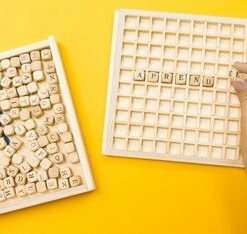
Reading and writing. Phonological awareness, access to the code, fluency and comprehension. The most developed of the three.
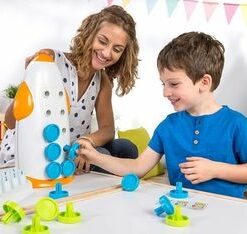
Calculation and mathematical language. Number, operations, problem solving, and the vocabulary a child needs to understand what a word problem is asking.
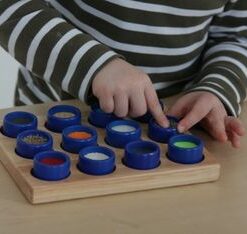
Motor skills. The hand before the pencil: manipulation, posting, threading and pre-writing.
Material sorted by ability rather than by school skill sits under areas of development, and if you want the game rather than the resource, game type.
Why it's sorted this way and not by age
An eight-year-old who hasn't automated decoding needs the same material as a six-year-old, not "Year 3" material.
Sorting by skill rather than by year lets you start where the child actually is. And it avoids the most demoralising thing you can do: hand a ten-year-old a workbook covered in nursery illustrations because that's the level they're working at.
The three don't work separately
Motor skills hold up writing: without a stable grip there's no stroke, and without an automated stroke, attention goes on how to write instead of what to write.
Language holds up maths: most errors in word problems aren't calculation errors, they're comprehension errors. A child who doesn't understand "how many are left" gets the problem wrong even though they can subtract.
Which is why it's worth looking at all three before deciding where to start.
What to check before buying
Exactly where they are
Not "struggling with reading" but which specific step is failing: identifying sounds, blending them, reading fluently, understanding what was read. Each needs different material.
Whether it can be graded
Single-level material is exhausted in two sessions. Material you can step up carries you for months.
Whether they'll use it alone
Self-correcting material allows independent work. Material that needs an adult beside it throughout is far more limited in practice.
Frequently asked questions
Is this school material or therapy material?
Both. Support teachers, speech and language therapists, educational psychologists and families all use it. What changes is the pace and the objective, not the material.
Is it suitable for specific learning difficulties?
Yes. Much of it is designed for dyslexia, dyscalculia and dysgraphia, though none of it is exclusive to those profiles.