




Chewing
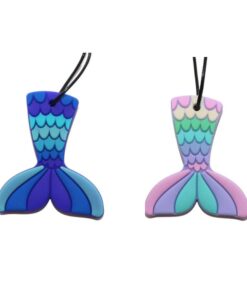
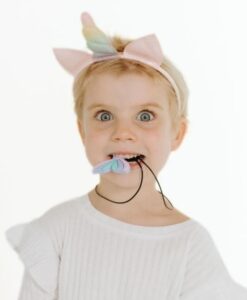
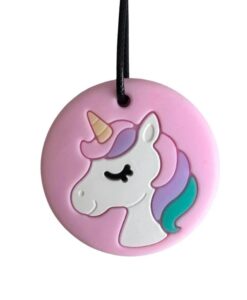


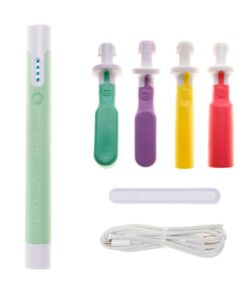
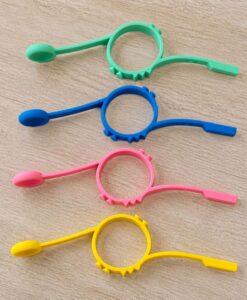

Pulsera sensorial – Layron Sense
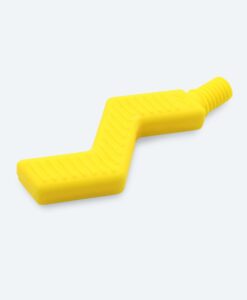
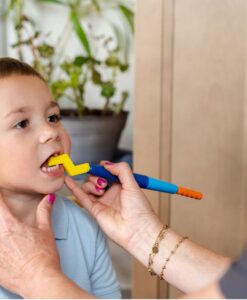
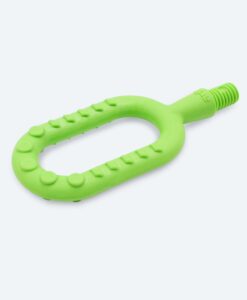
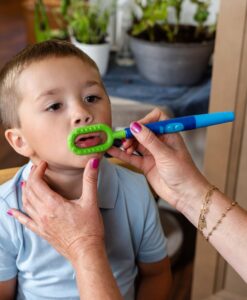
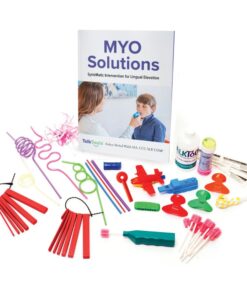

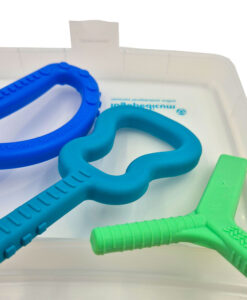
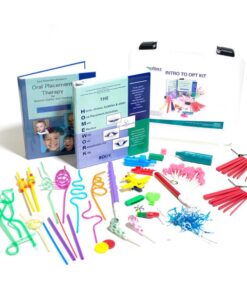
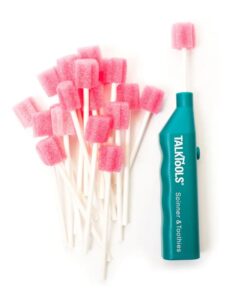
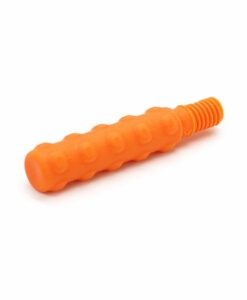
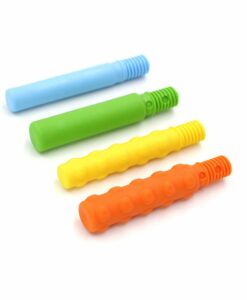
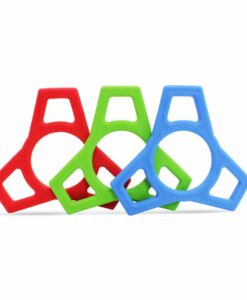
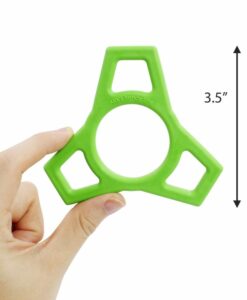
Fidget teether – Bendy Bite
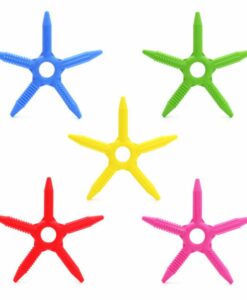
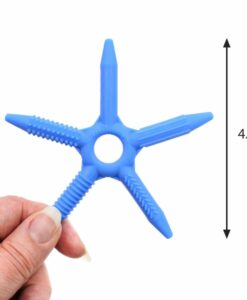
Texture teether – Sun star
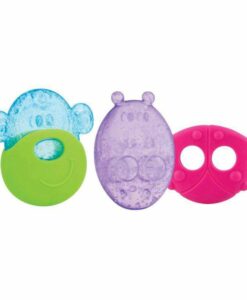
Cold teether with cover – IcyBite
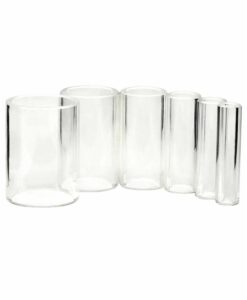
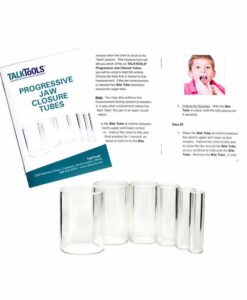
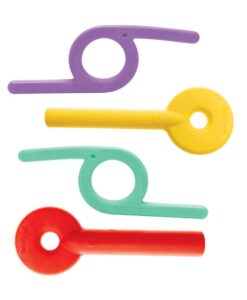
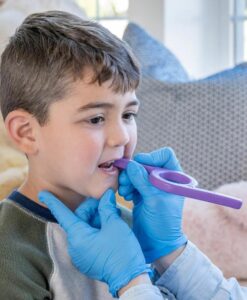
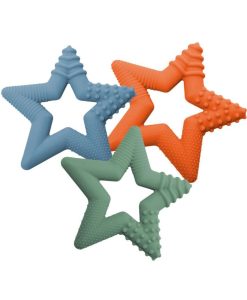
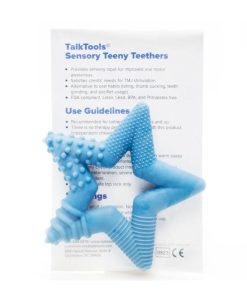
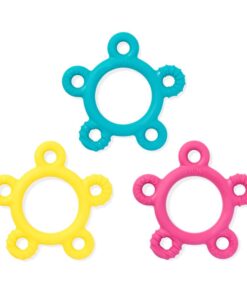
Star Sensory Teether – Talk Tools
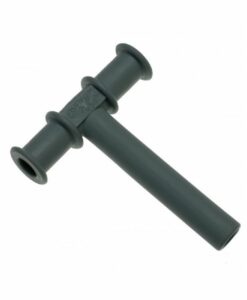
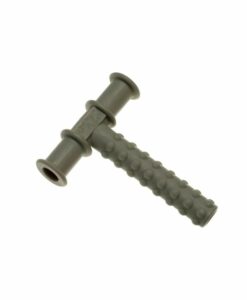
Chewytube gray
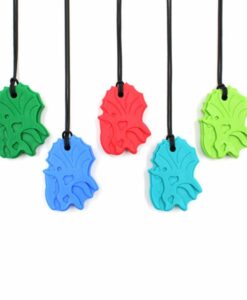
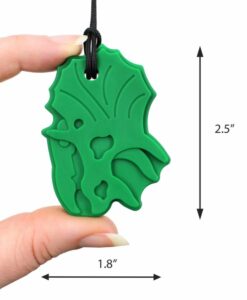
Teething Necklace – Triceratops
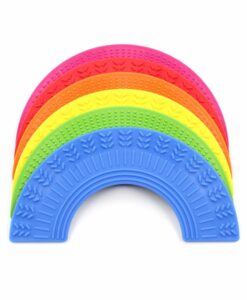
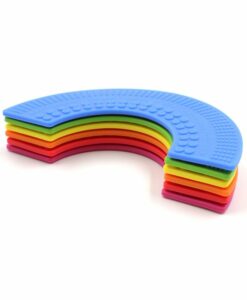
Anti-stress fidget teether – Rainbow
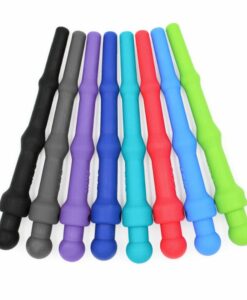
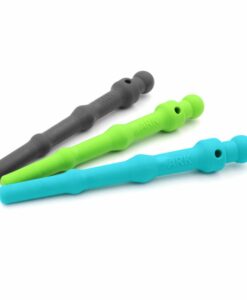
Extra large teether – Magic wand
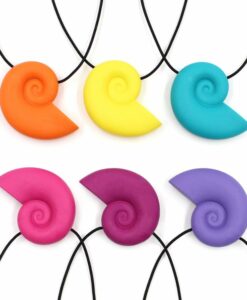
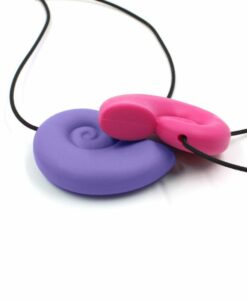
Teething necklace – Sea Snail
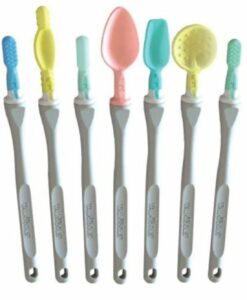
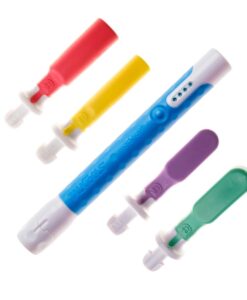
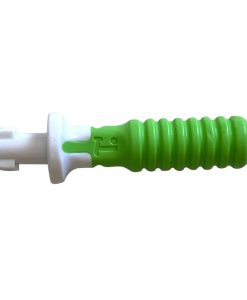
Sensi Talk Tools Tips – With Handle and non vibrating
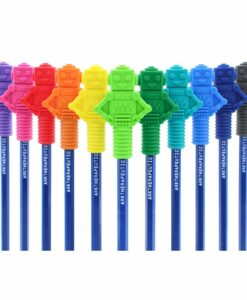
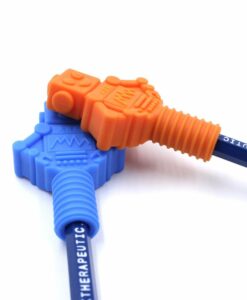
Robot pencil teether
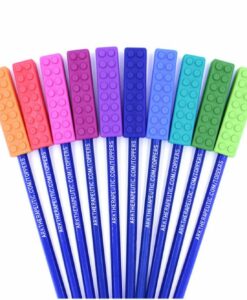
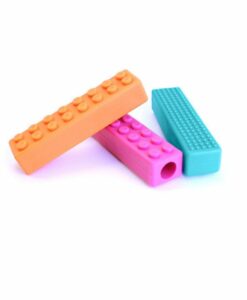
Textures pencil teether – brick
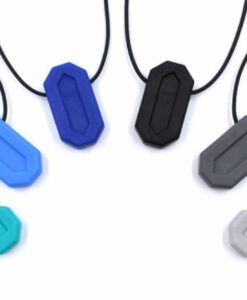
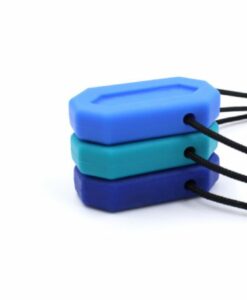
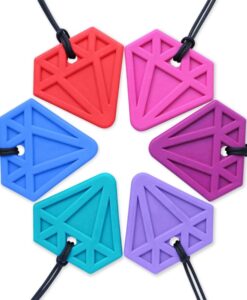
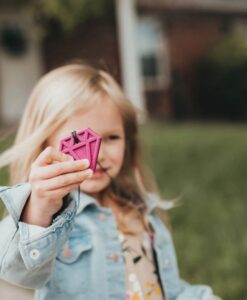
Gemstone teething necklace
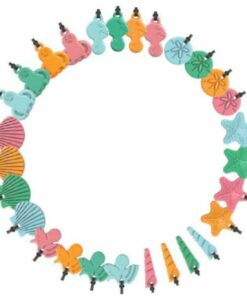
Teething Collars – Talk Tools
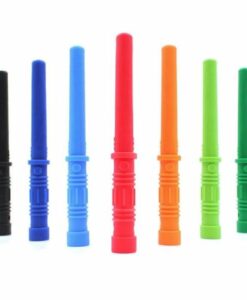
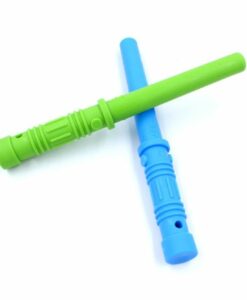
Giant extra long teether
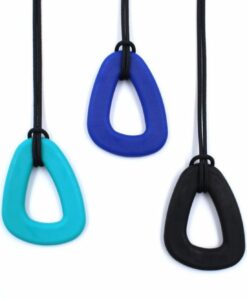
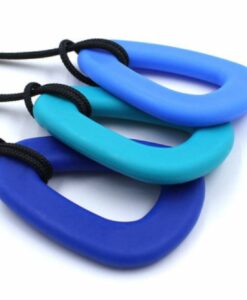
Loop teething necklace
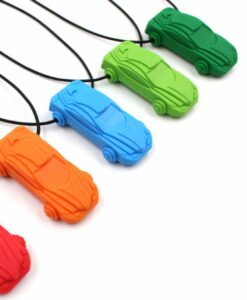
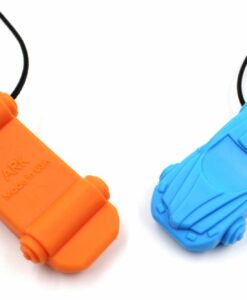
Car teething necklace


Giant textures teether
Chewing well is not just breaking food down: it is a motor pattern that has to be learned, in a specific order — vertical bite, then lateralisation, then rotation — and many children do not complete it on their own.
The tools here let you train that pattern away from mealtimes, with control over resistance and over the exact point in the mouth you are working on.
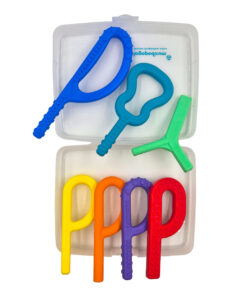
Graded jaw closure tubes are the backbone: you start with the softest and widest and move towards the firmest, with a progression you can measure. Chewy Tubes and Bite&Chew tips give biting surface in different textures and hardnesses. The Oral Placement Therapy (OPT™) starter kit from Talk Tools brings the full sequence with its protocol.
There are also therapeutic chews — chewelry, pencil toppers, chewable fidgets — for patients who need continuous proprioceptive input, in and out of the session.
Preparing with vibration before jaw work usually helps. Tongue and lip work continues in lips, tongue and more, and carryover to real food happens through swallowing and feeding.
⚠️ Looking for a teether for a baby with sore gums rather than therapy equipment? That is in Baby World teethers.
The chewing progression, step by step
Vertical bite (from 6 months)
The baby opens and closes without moving the jaw sideways. It is the first and simplest pattern. Trained with wide, soft tubes placed on the molars.
Lateralisation (9-12 months)
The tongue starts moving the bolus from side to side and the jaw follows. This is where alternating-side tube placement comes in.
Rotation (from 12-18 months)
The movement becomes circular and efficient. This is the mature pattern. Trained with higher resistance and progressively textured food.
When one of the three stages does not consolidate, what you see later is a child who swallows pieces whole, refuses textures, or takes an extremely long time to eat.
Choosing the hardness
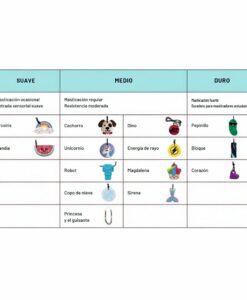
The practical rule is to start below what you think is needed. A tube that is too firm produces compensations: the patient bites with the incisors instead of the molars, or thrusts the jaw forward.
Colour-coded tubes let you record where each patient is and pick up the next session where you left off. That traceability is half the value of the material.
Training is not the same as substituting
There is chewelry here too, but two uses are worth telling apart because they get confused.
Training is what this category does: graded resistance, placement on the molars, measurable progression. The goal is for the chewing pattern to change.
Substituting is something else: giving something safe to bite to someone who bites clothing, nails or shirt collars. That material is developed in harmful habits and generalization.
Common questions
How long should each session be?
Short sets. Jaw musculature fatigues sooner than you would expect, and working through fatigue installs compensations rather than correcting them.
Can they be sterilised?
Medical-grade silicone tubes and chews can be washed and disinfected. Hygiene and disinfection has the trays, solutions and wipes made for oral tools.
Do they work for adults?
Yes. In post-stroke and post-surgical rehabilitation, and for jaw tone work in adults, the same tubes are used in the firmer grades.