




Reading and writing games


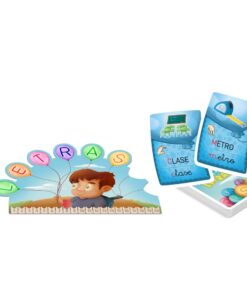
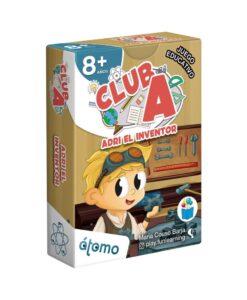
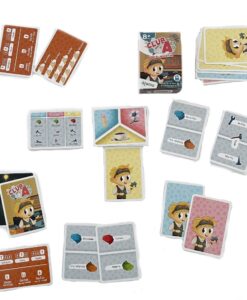


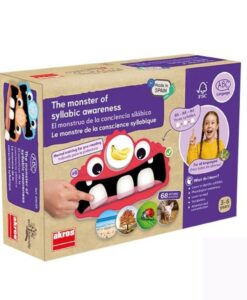


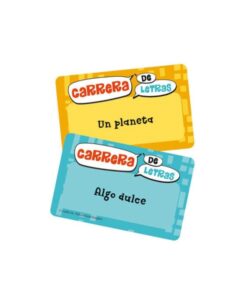
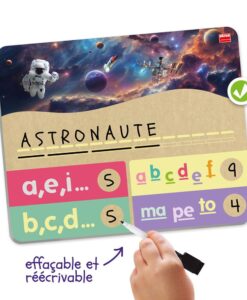
Carrera de letras

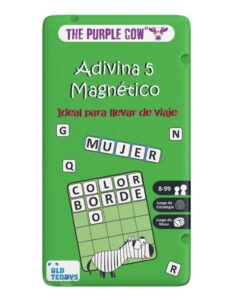
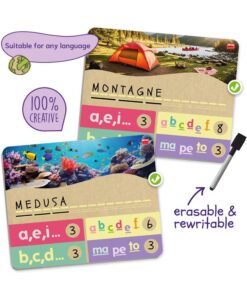
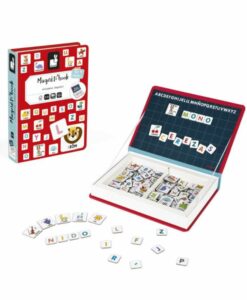
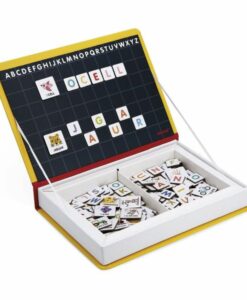
Magneti’book – Alphabet
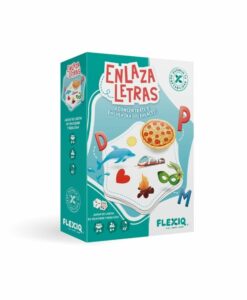

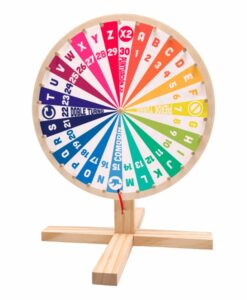
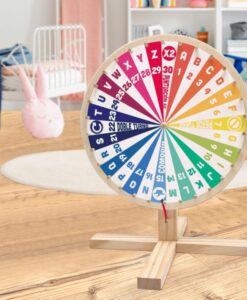
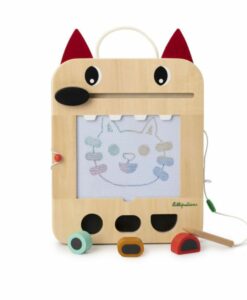
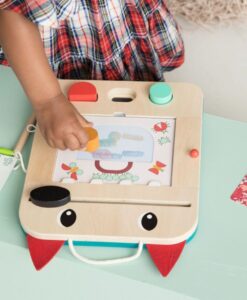
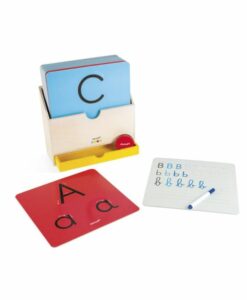


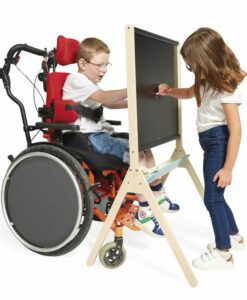
Writing station
Learning to read is the hardest thing a child does in their early years, and they do it in just a few of them. Turning that process into a game isn’t about motivation: the brain consolidates best what it repeats many times without noticing it’s repeating.
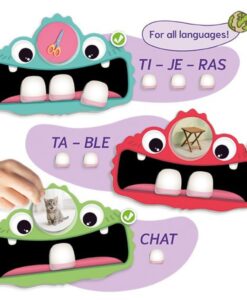
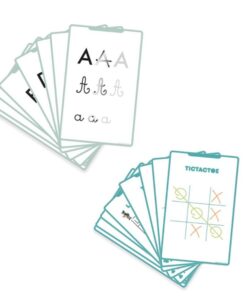
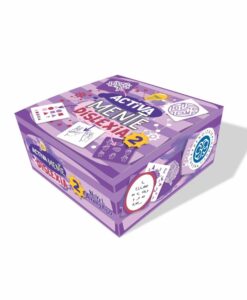
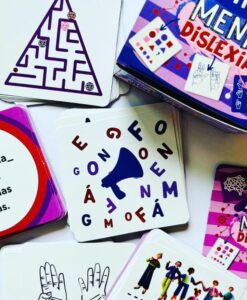
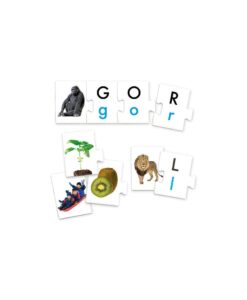
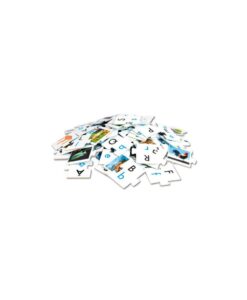
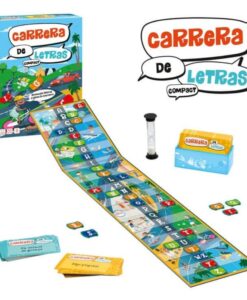
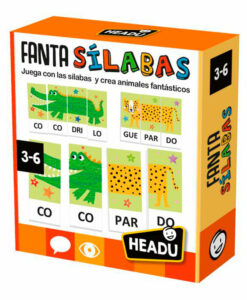
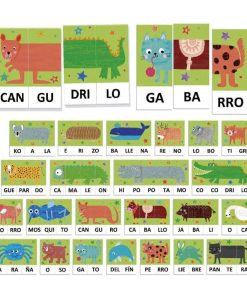
Here you’ll find letter and syllable games, a wooden movable alphabet, syllabic awareness material, stencils and tracing guides for handwriting, and specific resources for difficulties such as dyslexia.
It is part of game type and builds on language games — reading starts with the ear.
The order in which reading is learned
Reading doesn't start with letters. It starts much earlier, and skipping the earlier steps is usually what sits behind slow progress:
- Oral language. A wide vocabulary and well-formed sentences. Without it, decoding achieves nothing because there's no comprehension behind it.
- Phonological awareness. Realising words can be broken into chunks: rhymes, syllables, and finally sounds. No letters yet.
- Letter-sound correspondence. Letters arrive here, and it works best multisensorially: see them, touch them, trace them, say them.
- Decoding. Blending sounds into words. The phase that needs the most practice and where most children stall.
- Fluency and comprehension. Reading without conscious effort, so there's room to think about the meaning.
Why the movable alphabet works
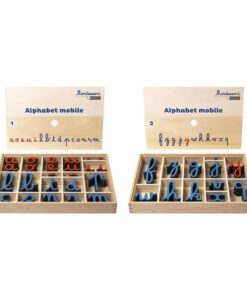
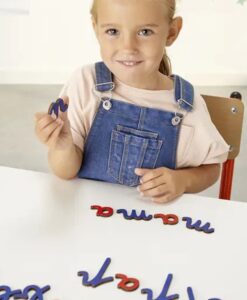
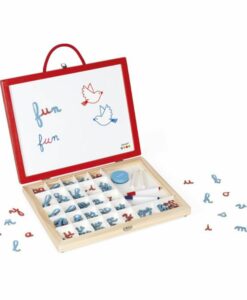
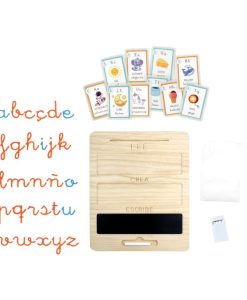
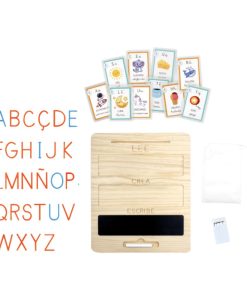
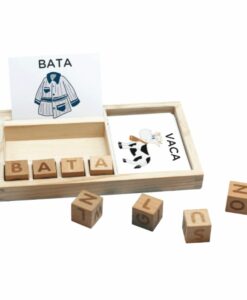
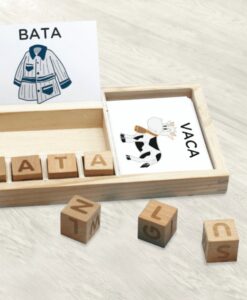
The wooden movable alphabet is probably the most effective literacy material there is, and among the oldest: it comes from Montessori. Its advantage is specific and hard to replicate with pencil and paper.
It lets a child build words without being able to write them. A four-year-old can form "cat" with loose letters long before they can form those letters with a pencil, so the phonological work happens without motor difficulty blocking it. And mistakes cost nothing: swap a piece, done — no rubbing out, no starting again, which keeps them trying.
When learning to read is harder than usual
Some children need far more repetition than their classmates, or confuse similar letters for longer than expected, or read by decoding every single word without ever reaching fluency. It isn't always dyslexia — there are many possible reasons — but it does warrant assessment if it persists.
Material that works in these cases shares three features: it's multisensory, it's finely graded, and it allows repetition without boredom, because repetition is exactly what's needed.
Where a specific learning difficulty is suspected, assessment belongs with the speech and language therapist, the school's specialist teacher or an educational psychologist. Here you'll find the material; the plan comes from the professional.
And handwriting — when?
Handwriting asks for two things at once: knowing which letter comes next, and being able to draw it. Separate them. Before formal handwriting you need pincer strength, wrist control and visual-motor coordination, and those come from playdough, tongs, cutting and play — not from more handwriting worksheets.
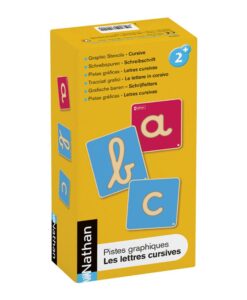
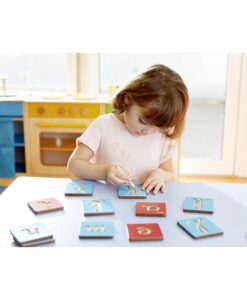
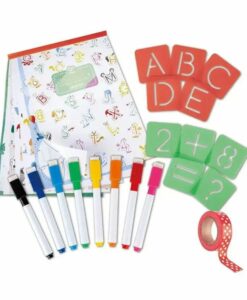
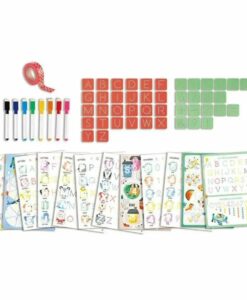
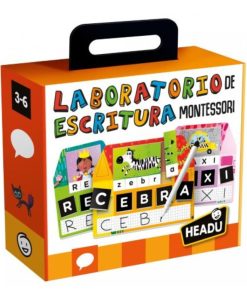
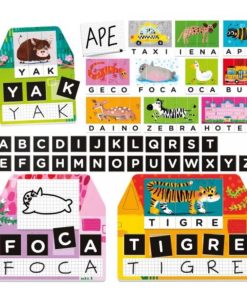
Once handwriting is being worked on, stencils and tracing guides help because they mark the starting point and direction, which is where the hard-to-correct errors get established.
Frequently asked questions about literacy games
What age does literacy work start?
The groundwork — oral language and phonological awareness — starts around 3-4 and is pure play. Letters usually come in between 4 and 5, and fluent reading between 6 and 8. There's plenty of normal variation, and pushing early doesn't speed anything up.
Capitals or lower case first?
Capitals are easier to form (straight lines, no joins) and easier to tell apart, which is why many approaches start there. But real text is lower case, so don't linger. Introducing lower case in parallel fairly early is the norm.
What is a movable alphabet for?
It's a set of loose letters, usually wooden, that a child uses to build words without writing them. It works the sound-letter relationship without the motor load of handwriting, and corrections mean swapping a piece rather than erasing.
Are these games suitable for children with dyslexia?
Much of the material is designed along principles that help: multisensory, finely graded and repetition-friendly. We also stock specific resources. That said, a game isn't an intervention: where dyslexia is suspected, professional assessment and a structured plan are what's needed.