




First teethers
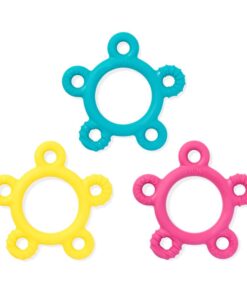

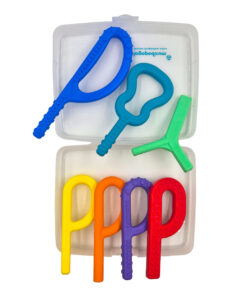


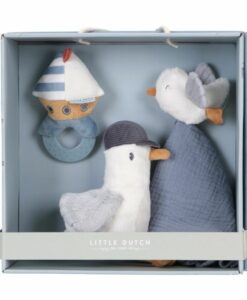
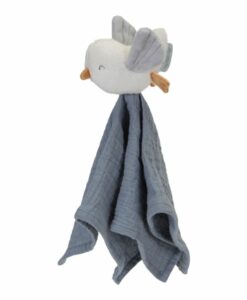
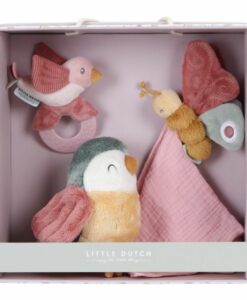
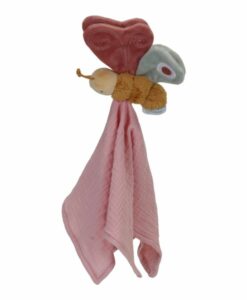
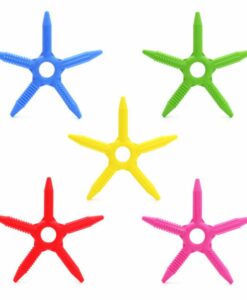
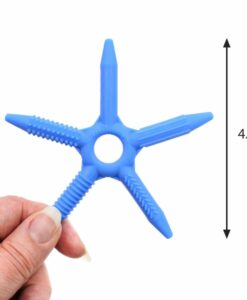
Texture teether – Sun star
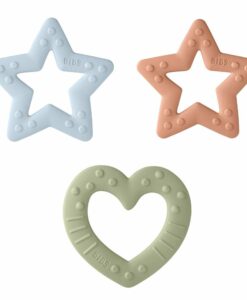
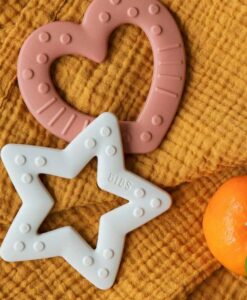
Baby Bitie Teether
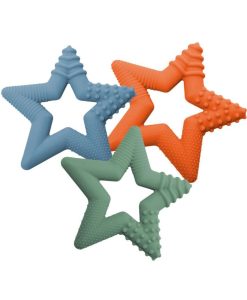
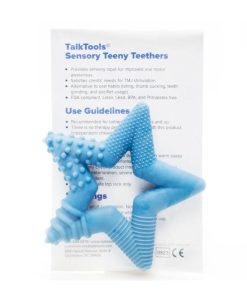
Star Sensory Teether – Talk Tools
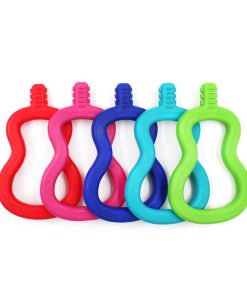
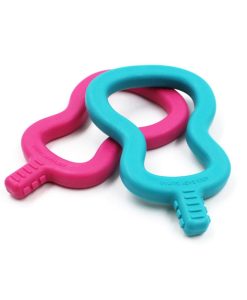
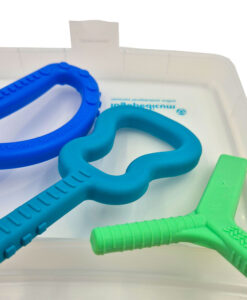
Baby guitar teether
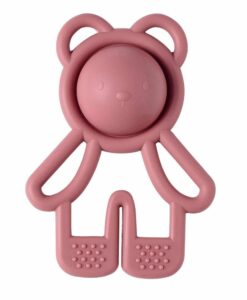
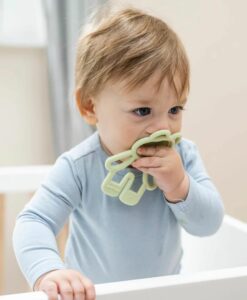
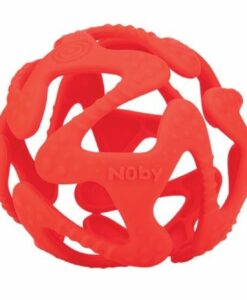
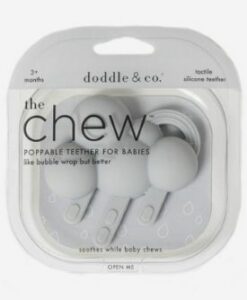

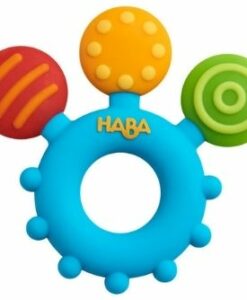
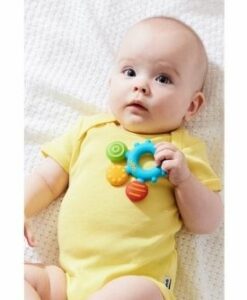
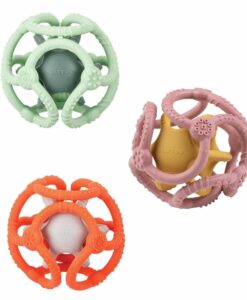
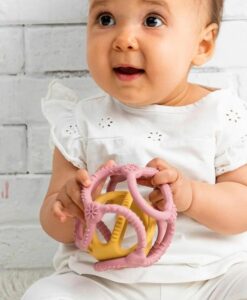
Silicone ball rattle teether
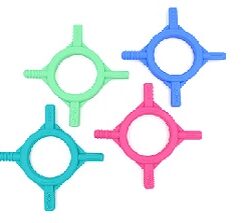
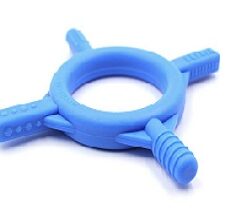
Mordedor Tetra-Bite Bebé
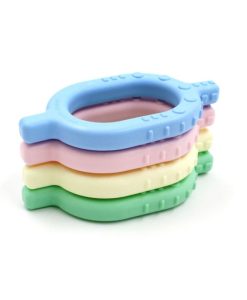
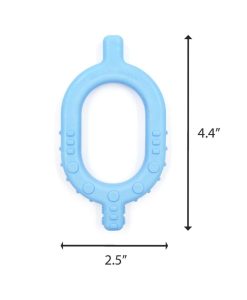
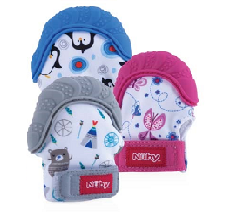
Baby grabber teether
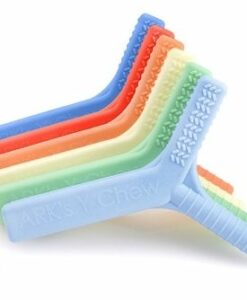
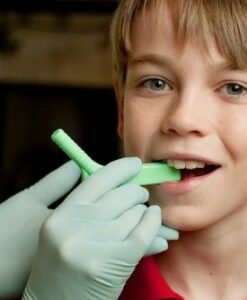
Teether Y
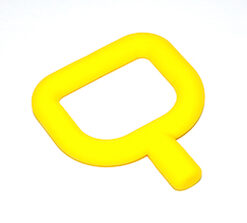
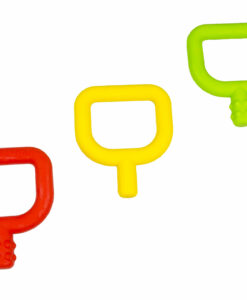
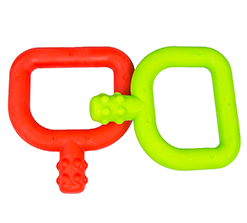
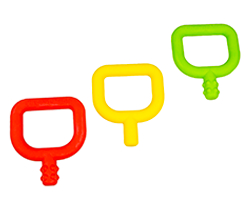
A first teether is not chosen for how much it soothes, but for whether the baby can actually hold it. At around three or four months the hand still grips with the whole palm and lets go without meaning to, so a large or heavy teether drops before it reaches the mouth. These are the ones made for that stage: light, with a ring or a narrow section to grab, and with gentle textures.
It is the first stop within teethers. Once the gum is clearly inflamed and what is needed is cold, the right category is cold teethers.
What makes a teether a «first» teether
It can be gripped. Rings, thin handles or elongated shapes a small hand can wrap around. That is what separates a starter teether from one for babies who already have a pincer grasp.
It is light. A heavy teether drops out of the baby's hand again and again, and ends up frustrating rather than soothing.
It has different textures on the same piece. At this age a baby is not biting for relief: they are exploring with the mouth, their most sensitive organ. Ridges, smooth areas and rough areas all give information about the object.
From what age can a baby use a teether?
From the moment the baby brings their hands to their mouth on purpose, around three months, and even before the first tooth appears. At that stage the teether supports oral exploration; teething relief comes later.
How do I know a tooth is coming through?
Heavy drooling, a swollen and tender gum, the urge to bite everything within reach, and more broken sleep. If the discomfort is obvious, cold helps more than any texture, and that is where fridge teethers come in.
How to use one, and how to look after it
- Always with the baby seated or propped up and an adult present. A teether is not something to leave in the cot.
- Check the piece every few days. Any crack, bitten-off fragment or change in texture is a reason to retire it.
- Clean according to the material. Silicone usually takes hot water and mild soap; always check the manufacturer's guidance before sterilising or putting it in the dishwasher.
- Never tie a teether around the neck or to clothing with long cords.
Therapy chews are not teething teethers
This category also holds pieces from ARK Therapeutic and TalkTools —Mini chew, Tetra-Bite, Y-Chew, grabber—. These are clinical tools: they train the chewing pattern in older children or in children with difficulties, with resistance levels and shapes meant to sit at a specific point in the mouth.
If that is what you are looking for, the full category is in chewing, within orofacial myology. A four-month-old does not need a therapy chew; a child who never completed the chewing pattern will not be helped by a teething ring.