




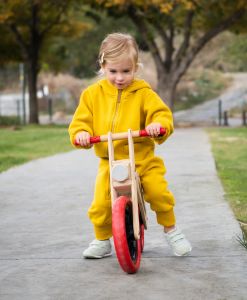
Motor stimulation supports a baby’s first big achievements: rolling, sitting, crawling, standing and taking those first steps. Each milestone arrives at its own pace, and play and free movement are the best way to encourage it without rushing.
At logopedicum we gather toys and materials for baby motor stimulation: ramps and crawling elements, push walkers for first steps, rockers and balance materials, and fine motor toys for little hands. Safe, Montessori- and Pikler-inspired materials, designed for motor development from 0 to 2 years.
Browse by stage within Baby World: crawling, first steps, rocking and balance, on wheels and fine motor skills.
A baby's motor development, step by step
Motor development follows a natural sequence: from head control to rolling, from creeping to crawling, and from pulling to stand to independent walking. It is not about rushing stages, but about giving the baby a safe environment and the right stimuli to explore movement on their own. A baby's motor skills are built through play, on the floor and in freedom.
Motor stimulation toys by stage
A selection organised by motor milestone:
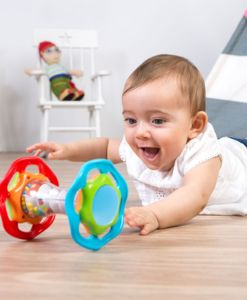
- Crawling: ramps, tunnels and toys that invite babies to move and creep.
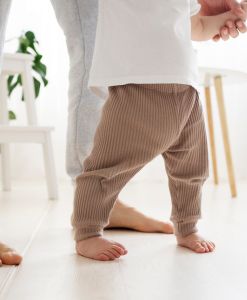
- First steps: push walkers that build confidence when walking.
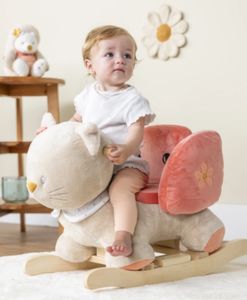
- Rocking and balance: rockers and boards for postural control.
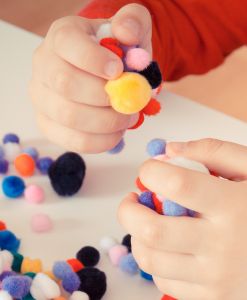
- Fine motor skills: sorters and manipulatives for a baby's hands.
- And on-wheels pull-and-push toys for movement.
Motor stimulation for families and early intervention
At home, motor stimulation turns the floor into a baby's best gym. In early intervention, physiotherapists, occupational therapists and speech therapists use it to support the tone, postural control and coordination that will later underpin manipulation and language. The key: a few well-chosen materials and plenty of free movement.
Frequently asked questions about baby motor stimulation
What is baby motor stimulation?
It is the set of games, materials and movement opportunities that support a baby's motor development (crawling, balance, first steps, manipulation) while respecting their pace, mainly through safe, free play on the floor.
Which toys help motor development by age?
From 0 to 6 months, contrast and manipulation materials; towards crawling, ramps and tunnels; for first steps, push walkers; and for balance, rockers and boards. The key is to match the stimulus to each milestone.
How is it different from motor skills games?
Baby motor stimulation focuses on developmental milestones from 0 to 2 years (crawling, walking, balance). Motor skills games cover fine and gross motor play across wider ages. Here the focus is the baby and their early motor development.