




Wooden Balance Bikes for Toddlers
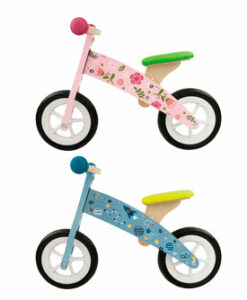
Wooden bicycle without pedals
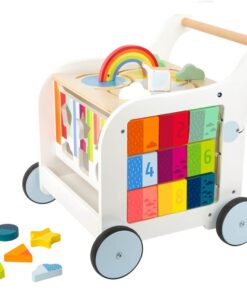
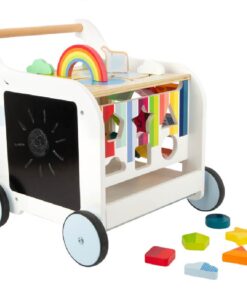
A balance bike teaches the genuinely hard part of cycling, which isn’t pedalling: it’s staying balanced. With no pedals or chain, the child pushes off with their feet, lifts their legs once they pick up speed, and learns to correct their line by instinct.
Here you’ll find ride-on vehicles for the stage where a child walks confidently and wants to travel faster than their legs allow.
It is part of baby motor stimulation, follows first steps and connects with rocking and balance.
Why no pedals rather than stabilisers
Stabilisers solve balance on the child's behalf: they allow pedalling on a bike that can't fall over, so the child learns to pedal but not to balance. The day the stabilisers come off, they have to learn the important part from scratch — with accumulated fear on top.
A balance bike reverses the order: balance first, propulsion later. Because their feet are always available to stop, the sense of control is complete and fear barely appears. The practical result is familiar to anyone who's watched it: children who start on a balance bike usually move to a pedal bike within days, with no intermediate stage.
Choosing the size
- Feet flat on the ground. Sitting on the saddle, the child should plant the whole foot with knees slightly bent. On tiptoes means the bike is too big.
- Adjustable saddle. It's what makes the bike last two or three seasons instead of one.
- Weight. A sensible rule: no more than a third of the child's body weight. A heavy bike falls on them and puts them off.
- Wood or metal. Wood is lighter, quieter and better-looking; metal handles heavy outdoor use better and often has a hand brake.
What it trains beyond balance
Riding a balance bike is continuous postural adjustment: micro-corrections of trunk, head and arms, dozens a minute, all automatic. That's proprioception and vestibular control working together, and it transfers to things as different as sitting upright in a classroom chair.
It also works motor planning — reading the corner before reaching it, braking early, steering around obstacles — and the perception of speed and distance. And there's a non-motor element that matters just as much: moving fast under your own power is one of the first clear experiences of competence and independence a small child gets.
Frequently asked questions about balance bikes
What age do you start on a balance bike?
Usually around 2, once the child walks and runs confidently. What matters isn't age but inside-leg height: if they can plant both feet flat while sitting on the saddle, they're ready.
Balance bike or trike?
They're different things. A trike doesn't fall over, so it doesn't train balance, but it allows pedalling very early and works leg coordination. A balance bike trains balance, which is the skill needed later. If you're choosing one with the future bike in mind, take the balance bike.
Do they need a helmet?
Yes, whenever they leave the house, even at slow speed. Beyond the obvious reason, fitting it from day one makes it routine and avoids the argument when the real bike arrives.
How long until they move to pedals?
It varies, but the transition is usually surprisingly quick: many children who've mastered a balance bike are pedalling within an afternoon, because all they're missing is the pedalling action. The balance, which takes months, is already there.