




Crawl
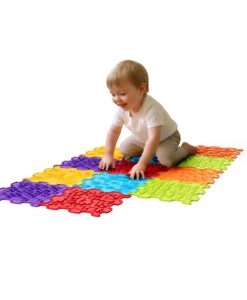
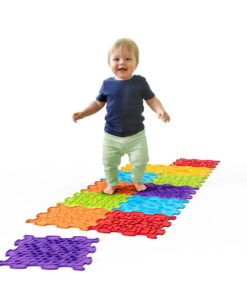


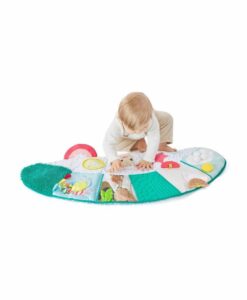
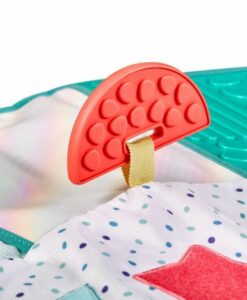
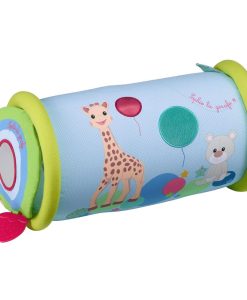
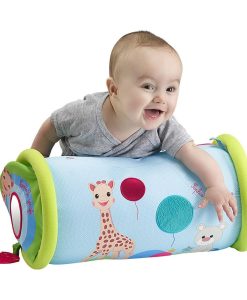
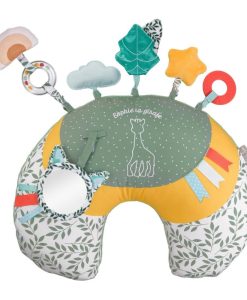
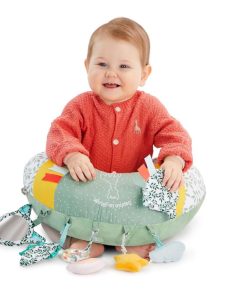
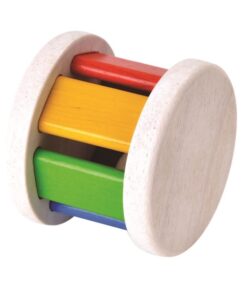
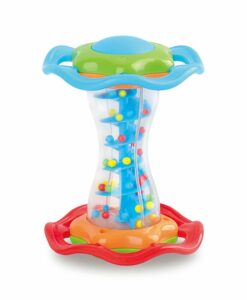
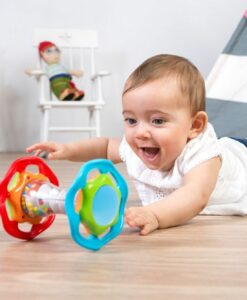
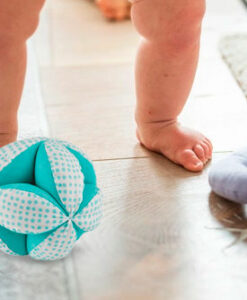
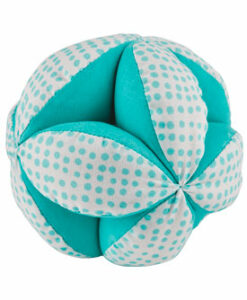
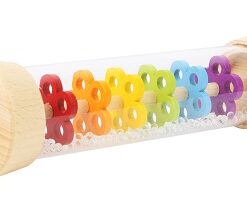
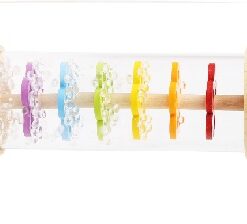
A baby doesn’t crawl because we put down a mat: they crawl because something a metre away is worth reaching. So the crawling gear that actually works isn’t what covers the floor — it’s what gives them a reason to move.
Here you’ll find mats and paths with contrasting textures to explore with hands and knees, balls and rain sticks that roll and sound as they move away, pull-back cars and trailing animals that escape on their own, and tummy time cushions to lay the groundwork before crawling starts.
It is part of baby motor stimulation and connects with fine motor skills and first steps.
Before crawling comes tummy time
Crawling doesn't appear out of nowhere: it's built on months of time on the tummy. Being prone makes the baby lift their head against gravity, which strengthens the neck, back and shoulder girdle — precisely what will later let them push up on their hands.
The usual problem is that many babies dislike being prone at first, and the session lasts twenty seconds. Two things help: a cushion that raises the chest slightly so the position costs less effort, and something interesting right in front of their face — a mirror, a textured ball, something that makes a sound — so there's a reason to stay there. Little and often beats one long session.
Setting up a crawling course at home
- Vary the textures. Alternating smooth, rough and soft surfaces turns moving into tactile exploration. That's exactly what sensory paths are for.
- Place the target at middle distance. Not so close they can reach it without moving, not so far they give up. Half a metre is usually about right.
- Use objects that move away. A rolling ball or a pull-back car resets the goal each time the baby arrives, so the game sustains itself.
- Add sound. A rain stick or a rolling rattle attracts even once the object leaves their field of view — which incidentally works on object permanence.
- Get down to their level. An adult lying on the floor a couple of metres away is still the best motivation there is.
Crawling isn't only a motor milestone
Crawling is the first cross-lateral pattern in development: right hand with left leg and vice versa, both halves of the body coordinating and alternating. That bilateral coordination underpins skills far removed from movement, like holding the paper with one hand while writing with the other.
Crawling also loads the weight through open palms, which shapes the arch of the hand and prepares the pincer grip. And it changes the baby's visual perspective: from staring at the ceiling to exploring space horizontally, judging distances and navigating around obstacles.
That said, there's no need to dramatise: some babies bottom-shuffle, roll or move in other ways, and plenty walk without ever having crawled. That alone isn't cause for alarm. Where there are concerns about motor development, the right step is an assessment by the paediatrician or a paediatric physiotherapist.
Frequently asked questions about crawling
What age do babies start crawling?
Most between 7 and 10 months, though the normal range is wide. Before that there's usually a commando-crawling phase on the tummy. What matters isn't the exact date but that there's progression and that the baby explores space somehow.
Which toys help a baby crawl?
Ones that move away or change: balls, pull-back cars, trailing animals, anything that rolls. They reset the goal every time the baby reaches it, so play continues without an adult repositioning things. Sound-making toys add extra pull once the object is out of sight.
Do you need a crawling mat?
Not essential, but useful if the floor is cold or hard. More valuable than a uniform mat is a surface with several textures: the baby gets different tactile information in each area, which turns moving into exploration rather than just travel.
How much tummy time does a baby need?
Common guidance is to build towards roughly 30-60 minutes a day spread out by around 3-4 months, starting in the first weeks with very short bursts. Little and often works best, always awake and supervised.