




BLW



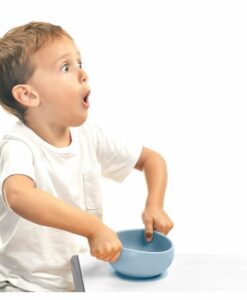
Bowl with silicone lid – Bowly

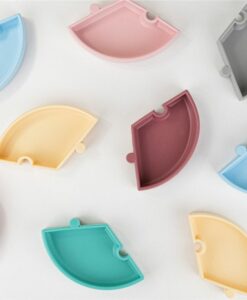
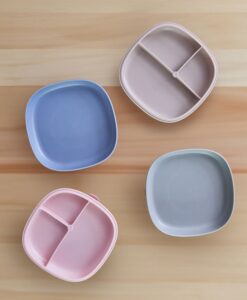
Harvard puzzle plate
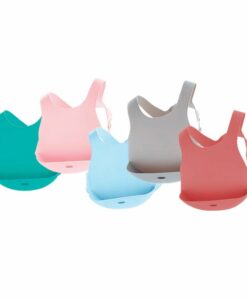
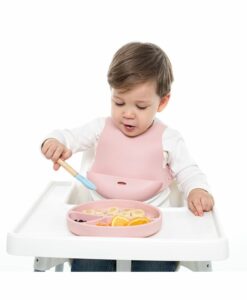
Flexible adjustable silicone bib with pocket
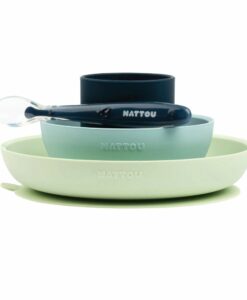
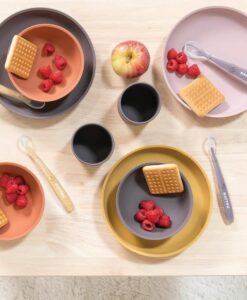
Elegant silicone tableware
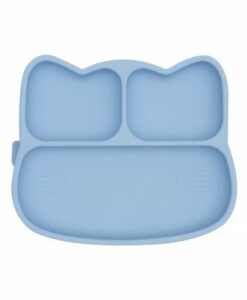
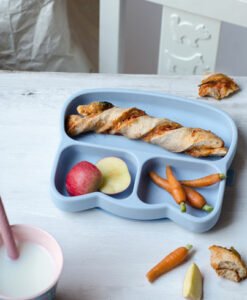
Silicone plate with suction cup kitten
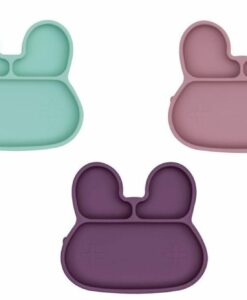
Silicone plate with suction cup bunny
Baby led weaning (BLW) means offering your baby food in manageable pieces so they bring it to their own mouth, instead of being spoon-fed. It changes who leads the meal: the baby sets the pace, the amount and what they explore first.
You need surprisingly little to make it work, but it has to be the right gear: plates that don’t go flying, cutlery a baby can grip in a fist, and bibs that survive the mess without drama. That’s what we’ve gathered here.
This selection is part of baby feeding and pairs with baby tableware, silicone bibs and baby cutlery.
What you actually need to start BLW
The short list is shorter than you'd think:
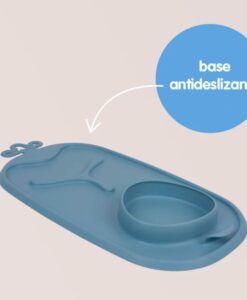
- A suction plate or tray. Without one, the baby's first move is to throw it on the floor. With suction, the food stays put and the baby concentrates on eating it.
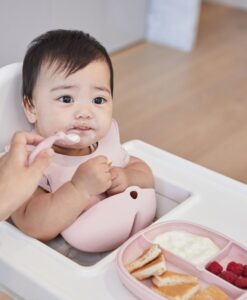
- A bib with a pocket. Silicone, rinseable at the sink. See bibs.
- First-stage cutlery: thick handle, small rounded head, no points. Not so they eat with it on day one, but so they start associating it with food.
- An open cup or valve-free spout. Sipping from a small open cup is part of BLW. See cups and bottles.
Everything else — cutters, moulds, 20-piece kits — is optional. Those four items are a perfectly good start.
BLW and oral development: why it matters beyond the food
Bringing food to the mouth by hand, managing a piece with the tongue and chewing it isn't just eating: it's oral-motor training. BLW exposes babies to varied textures from the start, and that early variety helps build a mature chewing pattern and reduces the risk of later food selectivity. That's why it interests speech and language therapists and occupational therapists, not only families.
It also trains the grasp: moving from a palmar grip (whole fist) to a raking grasp and then a fine pincer grip between index finger and thumb is a progression you can watch unfold in the high chair, week by week.
When BLW needs adapting
Not every baby reaches six months in the same shape. With prematurity, low tone, swallowing difficulties or syndromes involving oral-motor function, pure BLW may not be the right starting point, and a professional assessment first is wise. That doesn't mean ruling it out: spoon and finger foods are often combined, or you start with melt-in-the-mouth textures. In those cases adapted gear — built-up handles, nosey cut-out cups, high-rimmed plates — makes the difference.
Frequently asked questions about baby led weaning
What age can you start BLW?
Around 6 months, and only once the readiness signs are there: sitting up with little support, having lost the tongue-thrust reflex (no longer pushing food back out), and showing active interest in food. Age alone isn't enough; all three signs together are.
What's the difference between BLW and purées?
With purées the adult leads: they decide the amount, the pace and hold the spoon. With BLW the baby leads: picks up the piece, decides how much and how fast. They aren't mutually exclusive — plenty of families combine both — but BLW introduces textures earlier and gives the baby more motor control.
Is it dangerous? Do babies choke more?
Available evidence doesn't show a higher choking risk with BLW than with purées, provided the basics are followed: the baby always eats seated and upright, never alone, never in the car or on the move, and high-risk foods are avoided (whole nuts, uncut grapes and cherry tomatoes, hard raw carrot, sliced sausages). It's worth distinguishing gagging — normal, noisy and protective — from real choking, which is silent.
Do I need a full BLW kit?
No. A suction plate, a pocket bib and a small open cup cover 90% of what you need at the start. Large kits tend to include pieces that end up in a drawer. Better to add as you see what your baby actually needs.