




Cutlery
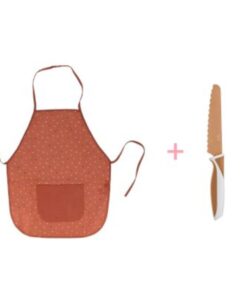
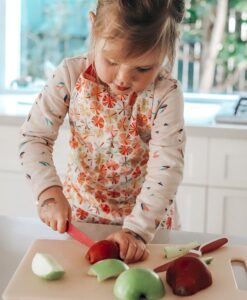
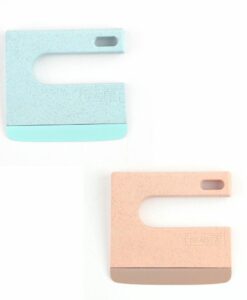
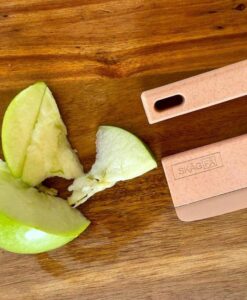
KLYV Child Safe Knife
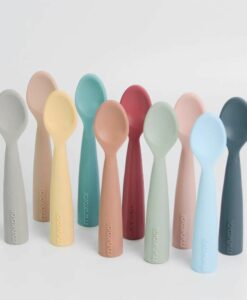
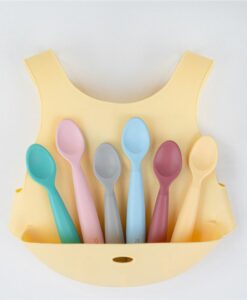
Silicone spoon
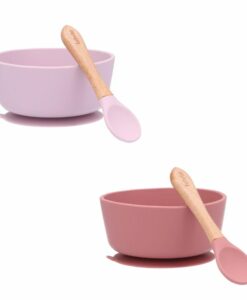
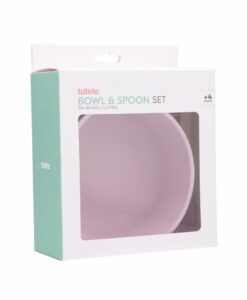
Bowl with suction cup and spoon
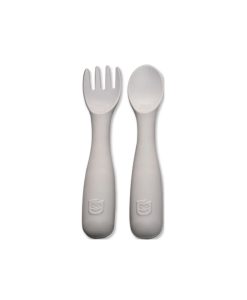
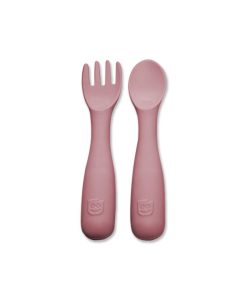
Bitsy Silicone Cutlery – Talk Tools
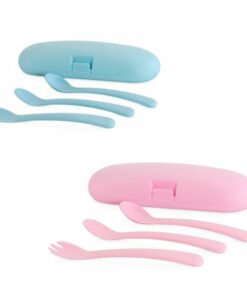

Anatomical cutlery set with case
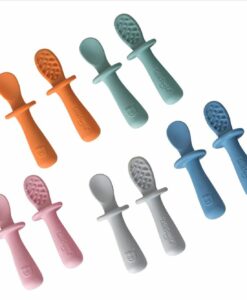
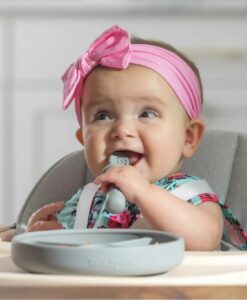
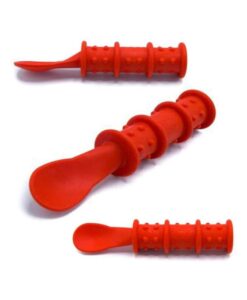
Itsy Silicone Spoons – Talk Tools
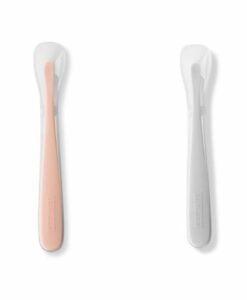
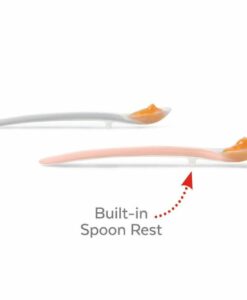
Easy feeding spoon set
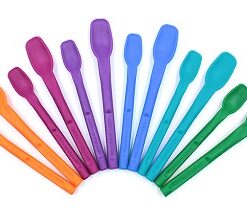
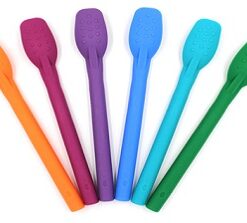
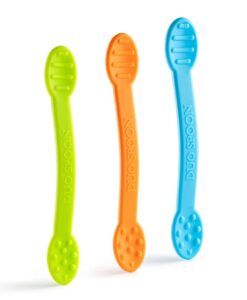
Ark Texture Spoon
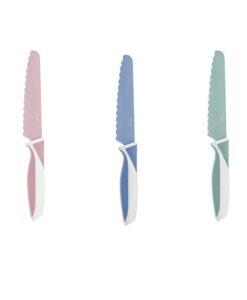
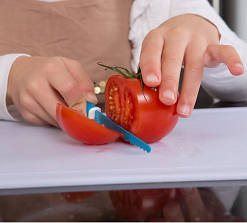
Children’s autonomy knife
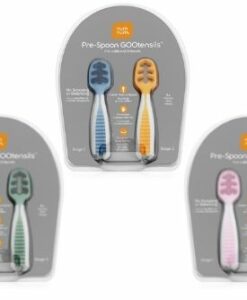

Primeras cucharas Num Num
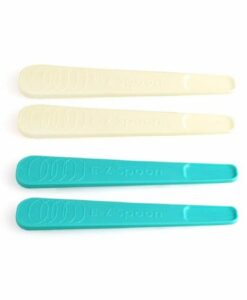
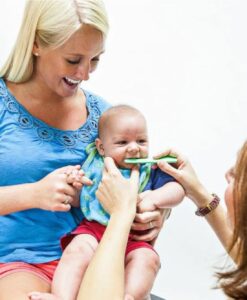
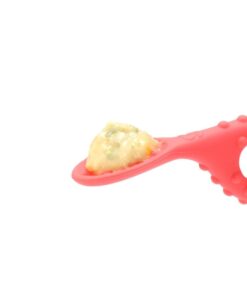
The spoon is the first utensil a child learns to handle, and they aren’t all for the same job. A first-stage spoon needs a thick handle — for the fisted grip — and a shallow bowl, so the baby can clear it with their lips instead of scraping it with their teeth.
Here you’ll find first-stage silicone spoons, anatomical cutlery sets, blunt autonomy knives, and also textured spoons and flat spatula spoons from therapy brands such as ARK Therapeutic and Talk Tools, used in oral-motor work and with children who have oral hypersensitivity.
They are part of baby tableware and pair with suction plates and baby led weaning gear.
Which spoon at which stage
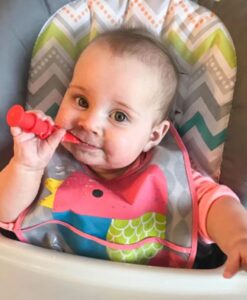
- First spoons (6-10 months). Short thick handle, flat soft bowl. The baby grips it in a whole fist and brings it to the mouth without precision: the spoon has to forgive the angle.
- Self-feeding spoon (10-18 months). Longer but still chunky handle, with a non-slip texture. Wrist rotation begins here — and so does the spilling.
- Anatomical cutlery (18 months-3 years). Blunt-tined fork and a small metal spoon; the handle is still thicker than adult cutlery.
- Autonomy knife (from 2-3 years). Blunt, cuts banana or avocado but not skin. It's the piece that delivers the most real independence and the one people buy least.
Textured spoons and oral-motor work
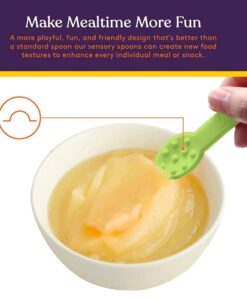
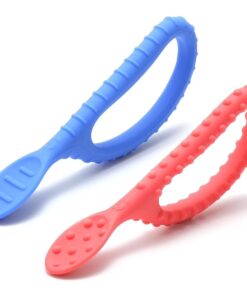
Spoons with a textured bowl — like ARK Therapeutic's or the Duo Spoon Loops — aren't a design gimmick. The texture provides proprioceptive and tactile information inside the mouth, which helps the child locate the food, activate lip closure and organise tongue movement.
They're used in specific situations: oral hypersensitivity, where a smooth spoon is aversive and a textured one supports gradual acceptance; hyposensitivity, where the child needs more input to register that there's food in the mouth; and lip-closure work, where a flat spatula-style spoon trains removal of food with the upper lip rather than the teeth.
If the aim is specifically therapeutic, there's more specialised equipment under chewing and swallowing and feeding.
The autonomy knife: the forgotten piece
Handing a three-year-old a knife sounds risky, and isn't — provided it's the right knife: blunt blade, very soft serrations, thick handle and a finger guard. It cuts banana, avocado, omelette or soft cheese, and won't cut skin.
The effect on independence is significant, because the child stops depending on an adult to prepare their own food. So is the fine-motor effect: cutting means stabilising with one hand while the other works — exactly the bilateral coordination they'll later need for scissors and handwriting.
Frequently asked questions about baby cutlery
What age do you give a baby a spoon?
You can offer one from the start of weaning, around 6 months, even if at first they use it as a toy or teether. Eating with any real efficiency usually arrives between 15 and 24 months, and it's normal to combine spoon and hands for months.
Silicone or metal spoon?
Silicone at first: soft, gentle on gums, cushioned if it hits the palate and it survives biting. Metal from around 2-3 years, once movement control prevents hard knocks and the child wants cutlery like everyone else's at the table.
What is a textured spoon for?
It's a spoon with a raised pattern on the bowl that gives tactile input inside the mouth. It's used in oral-motor work to encourage lip closure, improve food awareness in children with low oral sensitivity, and support gradual acceptance where there is hypersensitivity. The specific indication should come from the speech and language therapist or occupational therapist working with the child.
Is an autonomy knife safe?
Yes, always with supervision. They're designed without a cutting edge: they cut soft food by pressure, not by slicing, and won't break skin. Start with easy foods — banana, avocado, soft cheese — with an adult alongside.