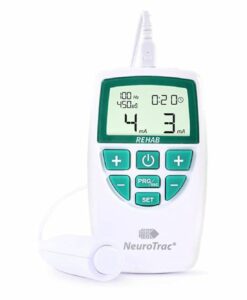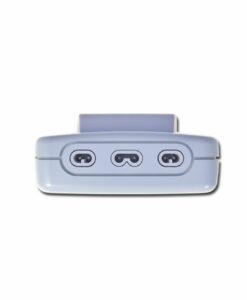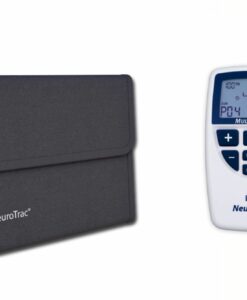
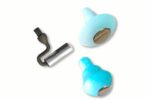


Portable electrostimulation pen
190,00 € (VAT not included)
A portable TENS stimulator in the shape of a pencil
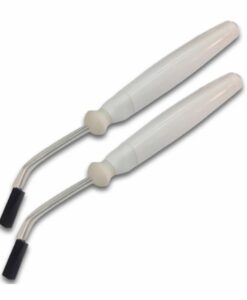
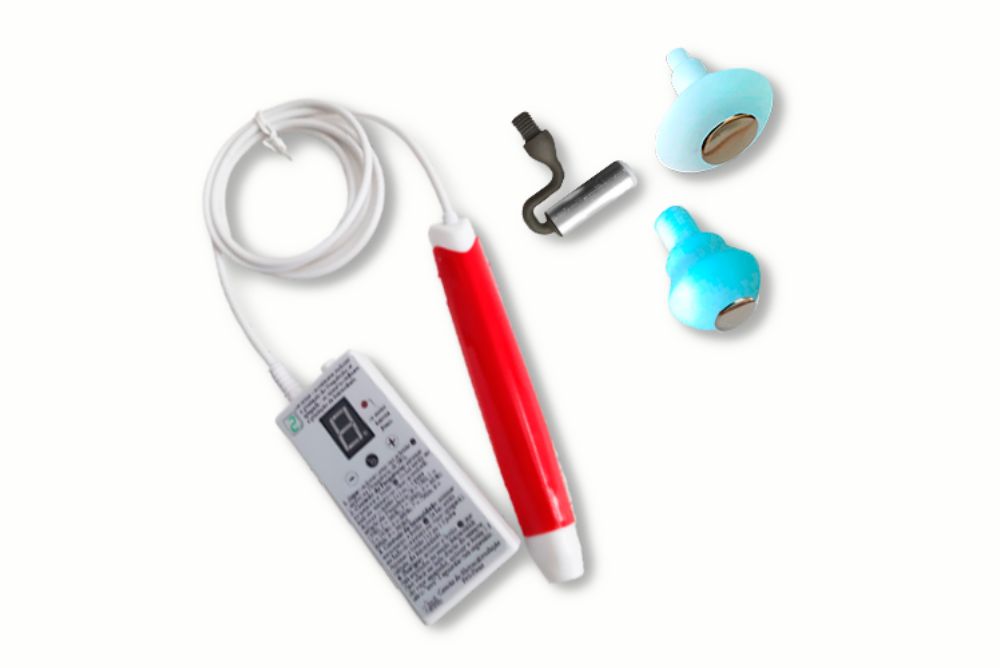
The pen or portable electrostimulation device in the form of a pencil.
- Ideal for applying low frequency electrical stimuli (5 to 90 Hz) in the orofacial and cervical region.
- Very suitable for acting on neuromuscular metabolism, achieving analgesia and muscle relaxation effects (pain relief, muscle relaxation or stretching, release of soft tissue tension, etc.).
- TENS current increases vascularization and promotes sensory input, producing oxygenation, vasodilation and endorphin release effects.
- It works with a 1.2 to 1.5 V AAA battery.
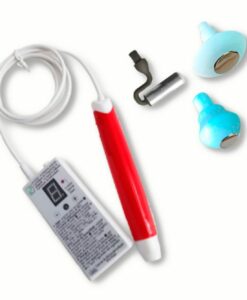
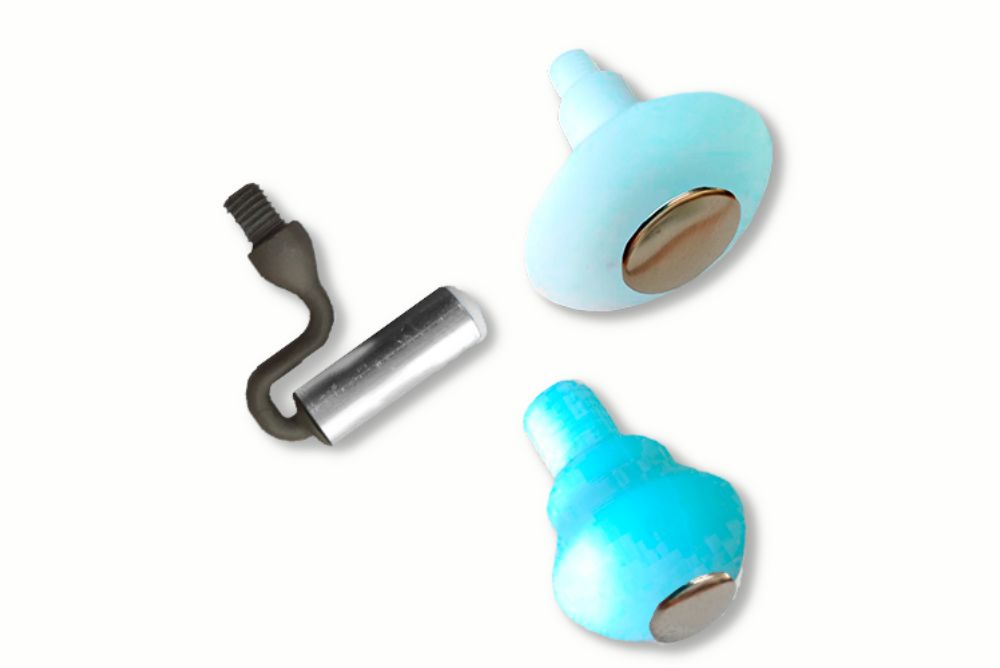
Includes: battery or charger, pen or device and 3 heads (2 flat circular and 1 roller).
| Brand | Profono |
|---|
In stock
Description
A pen or portable electrostimulation device
The portable electrostimulation device or pen is ideal for applying low frequency electrical stimuli (5 to 90 Hz) in regions of the body, being used in therapies in the area of Health as a resource of Electrotherapy, more specifically in Transcutaneous Electrical Nerve Stimulation (TENS – Transcutaneous Nerve Stimulation), with the purpose of acting on the neuromuscular metabolism, achieving effects of analgesia and muscle relaxation. It works with a 1.2 to 1.5 V AAA battery.
It is indicated whenever the health professional wishes to work with transcutaneous electrostimulation with electrical pulses in TENS mode, with frequencies between 5 and 90Hz, mainly in the orofacial and cervical region, in cases where it is desired to provide:
- Pain relief;
- Muscle relaxation;
- Encouraging muscle stretching;
- Release of soft tissue tension.
TENS current has been indicated for analgesia, muscle relaxation and increased vascularization. The application of stimulation at the sensory level can also promote sensory input, producing oxygenation, vasodilation and endorphin release effects. There are reports on the use of TENS for sensory rehabilitation: researchers refer to its use to promote afferent sensory input.
According to Lefèvre and Nalesso (2018):
Low frequency TENS – indicated for chronic pain;
High frequency TENS: indicated for acute pain.
Authors indicate a minimum time of 20 minutes of TENS application to obtain analgesia (Morgan and Santos, 2011).
High-frequency modulated TENS promotes immediate analgesia or after ten minutes of application, which can last from twenty to thirty minutes to two hours (Maciel et al., 2014).
Electrotherapy has been indicated as an adjuvant resource in speech therapy and should not be applied in isolation (Society…, 2020).
In Orofacial Motricity, TENS current has been indicated in the treatment of Temporomandibular Disorders and in cases of bruxism, in order to obtain analgesia and relaxation effects of the masticatory muscles (Grossmann et al., 2012; Marques et al., 2016; Lefèvre and Nalesso, 2018).
TENS at low (acupuncture) and high (conventional) frequencies has been used to promote increased salivary flow in patients with radiotherapy-induced hyposalivation (Paim et al, 2019). These authors observed positive results in the application of TENS at 50 Hz for 20 minutes, with a significant increase in salivary flow.
Instructions for use:
The closing of the electrical circuit is produced by the passage of the electrical signal to the patient’s skin and by the Dispersive Electrode in contact with the patient (floating grounding point).
For pain relief, electrical stimulation is recommended directly over:
- The painful area or around it (Liébano, 2021);
- By the path of the peripheral nerve that innervates the painful region (Liébano, 2021);
- Acupuncture points: skin regions with a high concentration of sensory nerve endings, vessels, tendons, periosteum and joint capsules (Santos; et al., 2018);
- Motor points: anatomical sites where the nerve enters the muscle through the epimysium, muscle fascia and are characterized by high electrical conductance and low skin resistance; muscle contraction can be elicited at lower intensities (Matrone et al., 2019);
- Trigger points: palpable and painful muscle nodules. They may be associated with excessive release of acetylcholine at the neuromuscular junction (Santos et al., 2012).
Relaxation and Muscle Stretch Encouragement (Lepri, 2020): synchronized stretching movements with gliding, in the direction of the muscle fiber.
Bibliographic references and further information can be found in the Pro-Fono Portable Electrostimulation Device Manual that accompanies the product.
Includes rechargeable batteries and charger. Includes: battery or charger, pen or device and 3 heads (2 flat circular and 1 roller).
PróFono instruments by area of work
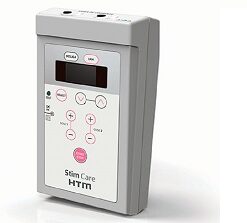
Within the electrostimulation category, PróFono is the home of the consumables and accessories. The conductive pen extender reaches specific points, the Stim care is the range's portable neuromuscular electrostimulator, and the facial mask with extraoral electrodes lets you treat several muscle groups at once. For resisted exercise, PróFono makes a family of exercisers with different loads: the facial exerciser for the perioral muscles, the tongue exerciser and the lip exerciser. The haltere-style lingual weights let you increase load gradually, which is hard to achieve with isolated oral praxis.Voice and aerodynamics
In voice and aerodynamics, the semi-occluded vocal tract exercise cup (SOVTE) applies the tube-in-water principle with stable depth control, and the Scape-scope makes nasal escape visible in hypernasality, useful when the patient cannot hear their own error.Why buy PróFono at Logopedicum?
This is professional-use equipment, designed for speech and language therapists and rehabilitation teams. If you are looking for the full set of resources in this area, the orofacial myology category brings together the complete catalogue across all brands. At Logopedicum you will find genuine products, updated stock, invoicing and a discount for registered professionals.
CONTACTA CON NOSOTROS
Departamento de asesoramiento
[email protected]
Departamento de formación
[email protected]