




Protocols
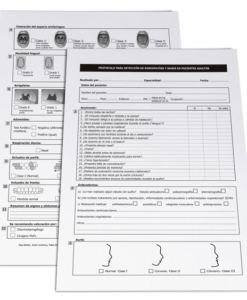
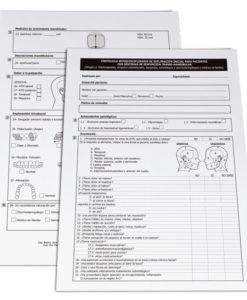
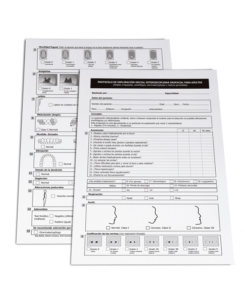
Assessment protocols are the least glamorous and most decisive part of an evaluation: they are the script that makes sure nothing goes unexamined. Here are ours, complete and free.
There is an interdisciplinary orofacial assessment in two versions —one for children, one for adults— and a screening protocol for snoring and obstructive sleep apnoea in adult patients.
It is part of free resources. The equipment for assessing —as opposed to the document— is in exploration and diagnosis.
Why «interdisciplinary»
Because what an orofacial assessment looks at does not fit inside one profession. Frenulum, occlusion, breathing, swallowing and posture are shared between speech therapy, paediatric dentistry, orthodontics and ENT, and an assessment that only looks at one part refers late, or does not refer at all.
That is why these protocols are written so the finding can be passed to another professional without translation: if the speech therapist sees a short frenulum, the document already records what the paediatric dentist needs to know.
How does the children's version differ from the adult one?
In what you expect to find. In a child you are assessing a system still developing: habits that can still be redirected, patterns that were never completed. In an adult you are assessing a system already established, with years of compensation and, often, consequences for sleep and breathing.
What is the snoring and OSA protocol?
A screening tool, not a diagnostic one. It gathers the signs that raise suspicion of obstructive sleep apnoea in an adult —snoring, pauses, daytime sleepiness, tongue position, nasal patency— in order to decide whether to refer to a sleep unit. Diagnosis comes from a sleep study, not a questionnaire.
How it is administered, in practice
Case history first, unhurried. Much of what steers the assessment comes from what the patient or family says before you look inside the mouth.
Then the examination, in a fixed order. The order is what makes a protocol a protocol: improvise it and things get missed, and it can no longer be compared with the next assessment.
And record what is normal too. An empty field does not distinguish between «it was fine» and «I did not look», and that difference matters when the case is reviewed months later or handed to another professional.