




Social skills






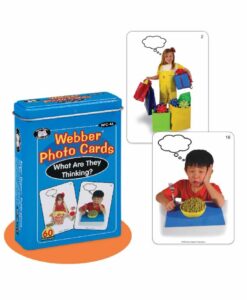
A lot of what happens between children is never said out loud: the classmate pulling a face, the one who edges away, the one who says one thing and means another. Reading that isn’t obvious to everyone — and it can be taught.
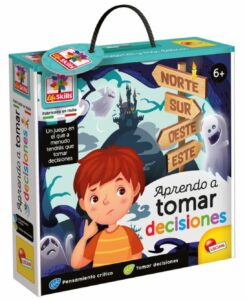
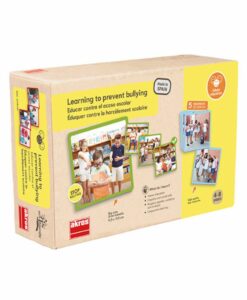
Here you’ll find material for working on the interpretation of social situations: inference cards about what characters are thinking and saying, decision-making resources, and dedicated bullying prevention material.
It is part of areas of development and builds on emotional education.
Theory of mind, without the jargon
It's understanding that other people have thoughts, wishes and beliefs different from your own, and that sometimes those beliefs are wrong. It sounds philosophical and it's intensely practical: it's what lets you know a friend will look for their coat where they left it, even though you saw someone move it.
It develops in recognisable phases: around 2 a child grasps that someone else may want something different; around 4-5 false-belief understanding appears; and between 6 and 9 irony, double meanings and white lies get refined.
When this understanding develops more slowly — common in autism, though not exclusive to it — a child can appear distracted or unempathetic when in fact they're missing information that's obvious to others.
Why inference cards work
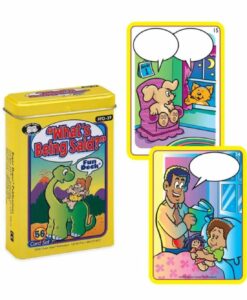
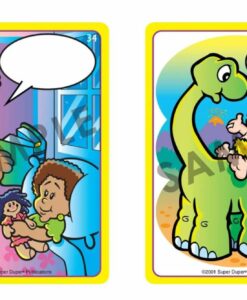
Material like "What are they thinking?" does something conversation can't: it freezes the scene. In a real interaction everything happens in two seconds. With a card you can stop, look at the faces, look at the context, and reason out loud.
What matters isn't guessing what the character thinks: it's explaining what you noticed in order to work it out. Asking "how can you tell?" turns the card into social observation training, and that's the transferable part.
It also works particularly well in groups, because different children notice different things in the same image.
Working on bullying: material and framing
Bullying prevention works when it addresses the group, not only the child targeted or the one doing it. Research is fairly consistent on one point: the variable that matters most is what the bystanders do — and that's the trainable part.
Which is why useful material isn't what explains what bullying is — they know — but what allows rehearsal of concrete situations: what to do when you see something, how to ask for help without feeling like a snitch, how to include someone left out.
Frequently asked questions
Can social skills be taught?
Yes, and there's reasonable evidence that explicit teaching works, especially when practised in real situations rather than only in session. Talking about it transfers least; rehearsing it and then naming it when it happens for real transfers most.
What is theory of mind?
The ability to attribute mental states — thoughts, wishes, beliefs — to oneself and others, and to understand they may differ from one's own. False-belief understanding typically appears around 4-5, with finer nuances developing throughout childhood.
Is this material only for autistic children?
No. It's used a great deal in autism because social reading often needs making explicit there, but it suits any child learning to interpret situations, and works well as a whole-class activity.
What age does it start?
With inference cards, from 5-6, once there's enough language to explain the reasoning. Before that the work is more basic: recognising emotions in faces and naming what's happening to someone else.