




Logical reasoning and maths





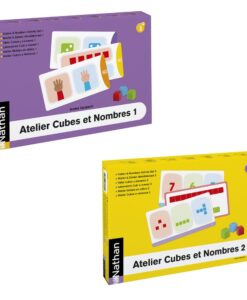
Cubes and numbers workshop


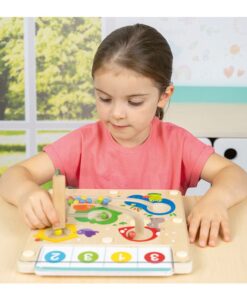
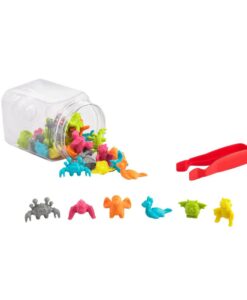
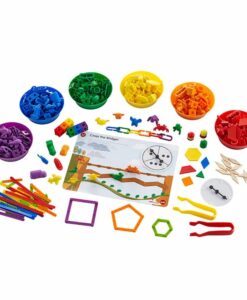
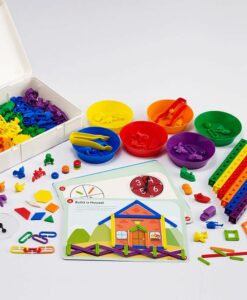
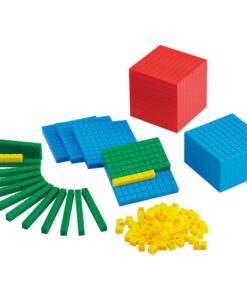
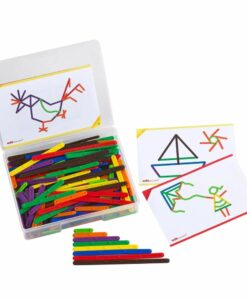
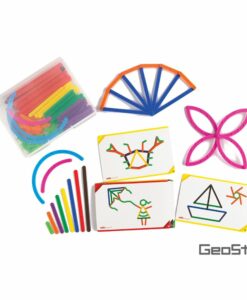
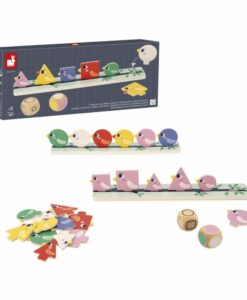
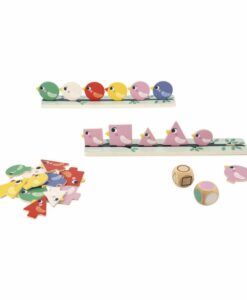
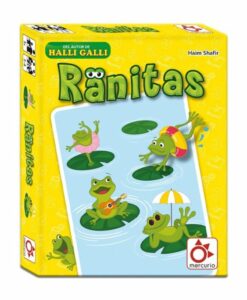
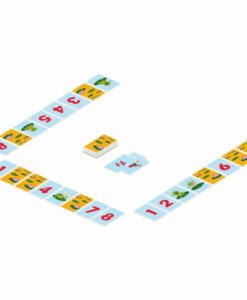
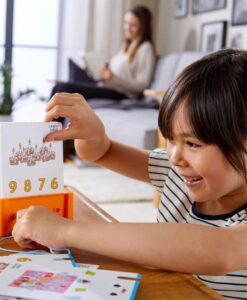
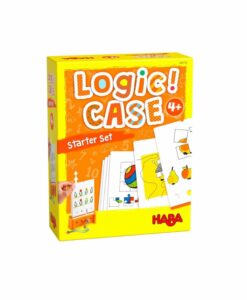
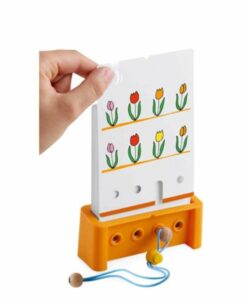

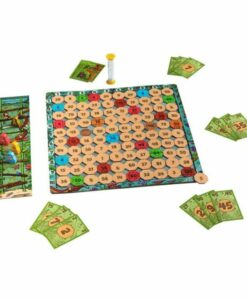
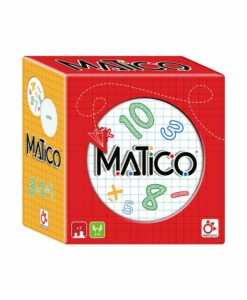
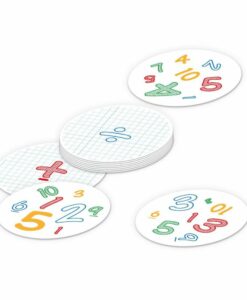
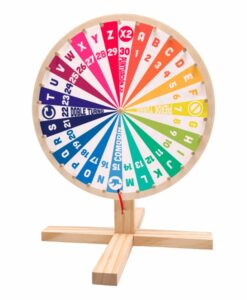
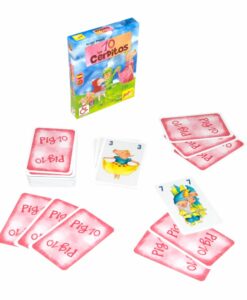
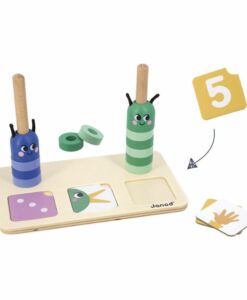


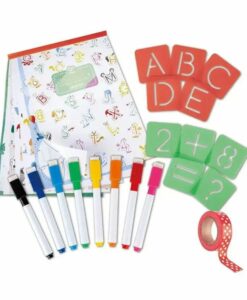
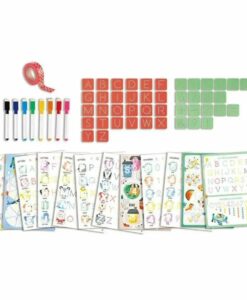
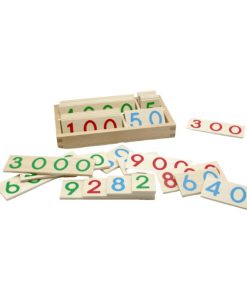
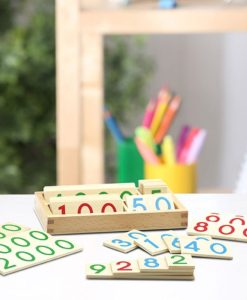
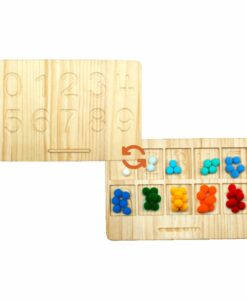
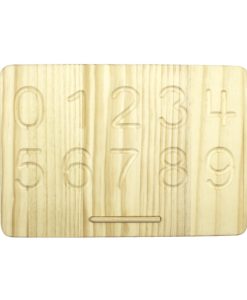
A child can recite one to twenty without any idea what a 7 actually is. Counting by rote and understanding quantity are different things, and the second is only built by handling: picking up seven objects, seeing they weigh more than five, sharing them out, confirming they’re still seven when spread apart.
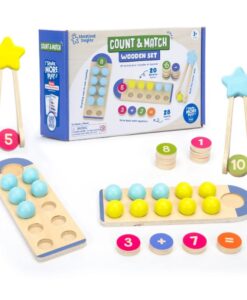
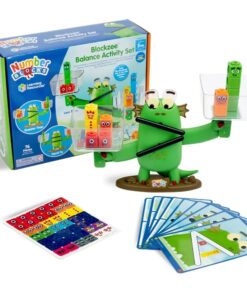
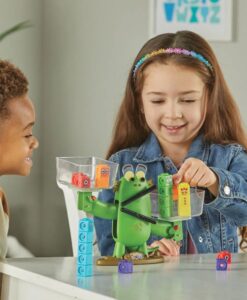
Here you’ll find material for exactly that: number rods, counting sets, balance scales with numbered weights, mental calculation games, algorithm games and multiplication material.
It is part of areas of development and builds on spatial orientation.
Concrete to abstract: the sequence you can't skip
- Concrete. Real objects you can hold: counters, rods, bottle tops. Here, 7 is seven things in your hand.
- Pictorial. Drawings of those objects. No longer touchable, but visible.
- Abstract. The symbol: the written numeral and the operation.
Most school teaching starts at step 3, and that's where children who need more time get lost. Hands-on material isn't "for little ones": it's the step that makes the symbol mean something.
Number rods, and why they still work
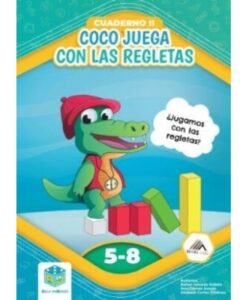
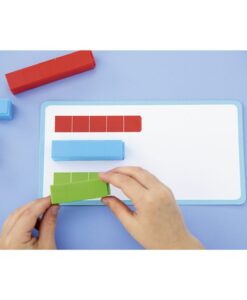
Cuisenaire rods — coloured bars where each length is a number — are nearly a century old and remain among the most effective materials there are, for one specific reason: they make the relationship between numbers visible and tangible.
With them a child doesn't memorise that 3+4=7: they see it, because the 3-rod and the 4-rod together measure exactly the same as the 7-rod. And they discover independently what's hard to grasp by rote: that 7 can be made many ways, that subtracting is finding what's missing, that multiplying is repeating the same rod.
Dyscalculia and maths difficulties
Not every child who struggles with maths has dyscalculia, but some signs are worth noting: persistent difficulty recognising small quantities at a glance without counting, still counting on fingers long after peers, not retaining basic number facts however much they practise, or systematically confusing digit order.
What works in these cases matches what this material does: plenty of concrete work before the symbol, one new idea at a time, and spaced repetition with material that doesn't bore.
Frequently asked questions
What is hands-on maths material?
Any physical object that lets you represent quantities and operations: number rods, base-ten blocks, counters, number balances, abacuses. It lets a child experience number relationships before working with written symbols alone.
What age does it start?
From 3, with counting, sorting and comparing quantities — that's maths even if it doesn't look like it. Rods work well from 4-5 and stay useful into upper primary for fractions and multiplication.
Is it useful for primary-age children?
Very much so, especially where difficulties have built up. Going back to concrete material with an eight or nine-year-old isn't going backwards: it's building the foundation that never quite set.
What is a number balance?
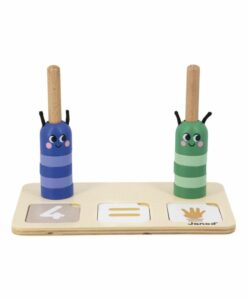
A balance scale where you hang numbered weights. Put 4 and 3 on one side and 7 on the other, and it balances. It turns mathematical equality into something physical and verifiable, which is why it works so well for understanding what the equals sign means.