




Fine motor skills











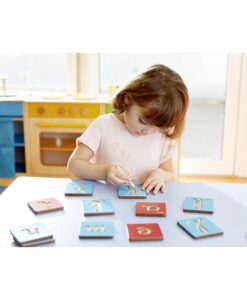



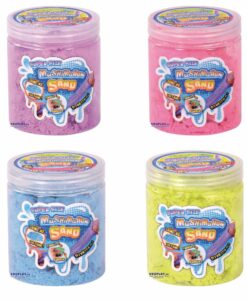
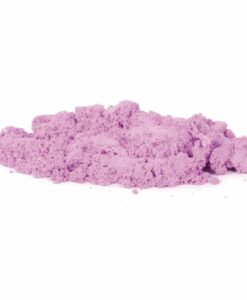
Moldable sensory sand
Some children avoid colouring, cutting or writing, and it’s almost never because they don’t want to: it’s because it costs them three times what it costs their classmates, and they run out of steam before finishing. When the problem is how they hold the tool, changing the tool achieves more than insisting.
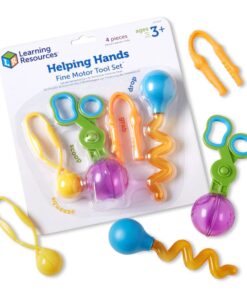
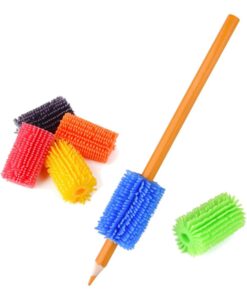
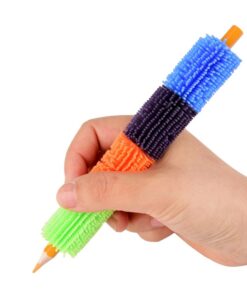
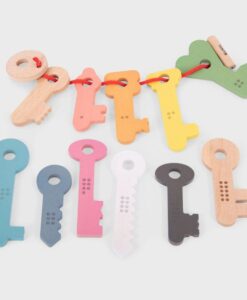
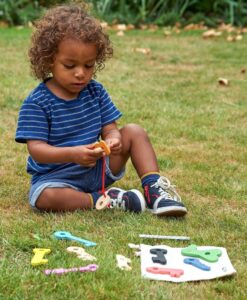
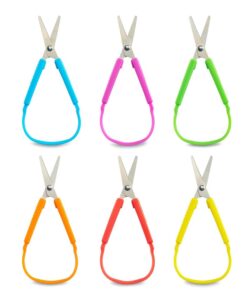
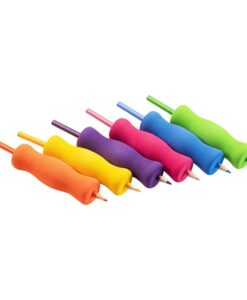
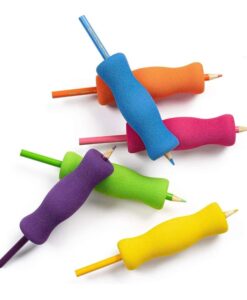
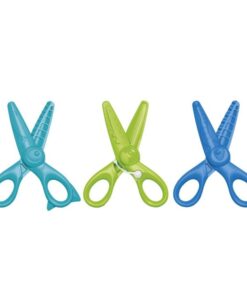
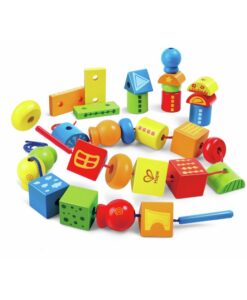
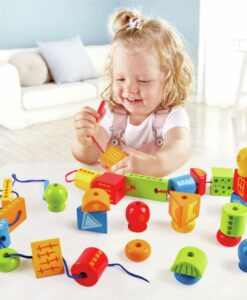
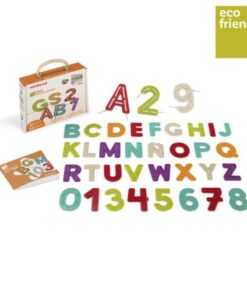
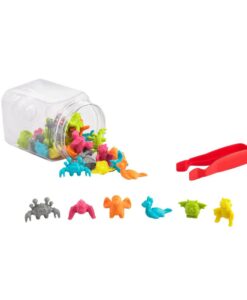
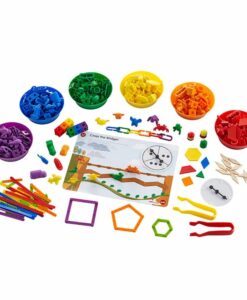
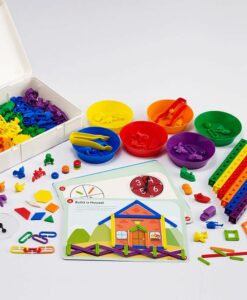
Here you’ll find fine motor material designed for school and therapy work: pencil grips in various shapes and densities, adapted scissors with loops and self-opening springs, pincer tool sets, and threading and manipulation material.
It is part of areas of development and connects with spatial orientation. For baby and toddler material, see fine motor skills 0-3.
When a pencil grip genuinely helps
A grip doesn't correct a grasp by itself: it makes the wrong grasp physically uncomfortable and the right one comfortable. That's the whole logic, and it's why it works without anyone having to keep reminding.
It's worth considering when you see any of these: a fisted grasp beyond 4-5 years; so much pressure that the page dents or the point breaks; hand pain after a short spell; systematic avoidance of table work; or a grasp so tense the writing stays shaky despite practice.
And an honest caveat: if the underlying issue is strength or shoulder stability, a grip only masks the symptom. That needs earlier work with playdough, tongs, elastics and vertical-surface activities. A grip is an aid, not a treatment.
Which grip for what you're seeing
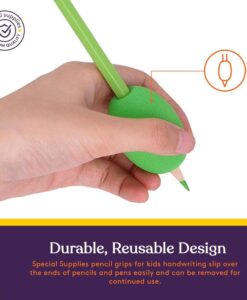
- Soft and thick (Kushy Squishy type). For low strength and weak grasp: increases diameter and reduces the effort of holding.
- Ergonomic with moulded recesses. To place each finger. The most directive, and best when a grasp is well established.
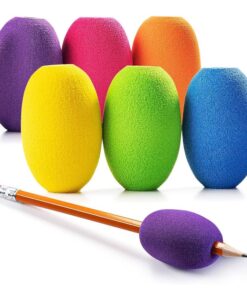
- Egg or ball shaped. For very tense grasps: forces the hand arch open and eases pressure.
- Giant foam. For significant motor difficulty or low tone, where bulk is needed.
Multi-packs let you trial which one fits before committing — exactly how it's done in clinic: there's no best grip, only the one that suits that hand.
Adapted scissors: cutting is harder than it looks
Cutting demands three things at once: opening and closing with one hand, stabilising and turning the paper with the other, and tracking a line with the eyes. One failure is enough to wreck the result.
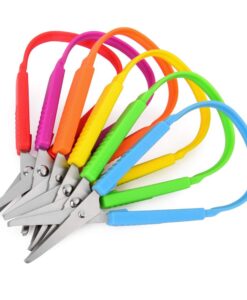
Self-opening scissors — spring-loaded — remove the first: the child only has to squeeze. That frees up attention for the other two and makes the experience successful from the outset. Large-loop versions also let an adult guide from outside without forcing the child's hand.
The progression that works: snip first (a single cut into a narrow strip), then short straight lines, long straight lines, curves, and finally closed shapes.
Before the pencil: what needs to be in place
This is the commonest mistake in handwriting work: starting with the stroke. Before a hand can write fluently, four things must be running — and none of them are trained with worksheets.
Pincer strength (playdough, pegs, elastics), shoulder and elbow stability — trained on a vertical surface, with the board on the wall, and the most frequently forgotten — finger isolation, and the arch of the hand, which develops by holding small objects in the palm while writing with the fingers.
Frequently asked questions
What age should a child hold a pencil properly?
A mature tripod grasp usually settles between 5 and 6. Before that, fisted or four-finger grasps are normal and needn't be rushed. What does warrant attention is a very tense or painful grasp, or one that isn't developing beyond 6.
Do pencil grips work for every child?
No. They help when the issue is finger placement or excess pressure. Where the difficulty comes from a lack of strength or trunk and shoulder stability, a grip won't fix it. Ideally an occupational therapist identifies what's failing before you choose.
Which scissors for a child who can't cut?
Self-opening spring scissors, because they remove the hardest part: opening. The child only squeezes, freeing them to follow the line and turn the paper. Large loops also allow guiding from outside. And always blunt-tipped.
Can they be used with a whole class?
Yes — that's what the multi-packs are for. Having grips available for whoever needs them, without singling anyone out, works far better than handing one to a single child in front of the others.