





Setting up a multisensory room isn’t buying things that glow. It’s deciding which sensory system you want to stimulate in each corner, and choosing equipment that lets you turn the intensity up and down depending on who walks in.
This is the catalogue organised on that basis: by what it stimulates. Six sections, 287 items, from the fibre optic projector of a Snoezelen room to the textured ball that fits in a pocket.
The six sections
The 5 senses
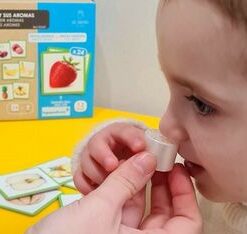
The largest section, with 139 items. Sight, hearing, touch, smell and taste material, for working each channel separately before combining them. → See the 5 senses
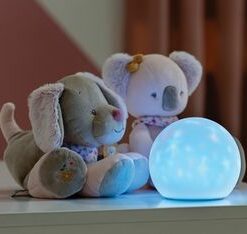
Light resources
Fibre optics, bubble tubes, projectors and luminescent material. The visual heart of a Snoezelen room and the first thing people look for when building one. → See light resources
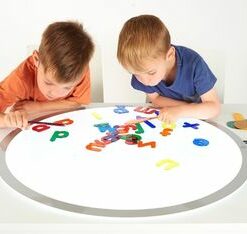
Light tables and accessories
The light table and everything that goes on it: translucent sheets, colour blocks, sand, transparencies. Works visual contrast and attention. → See light tables
Balance and motor skills
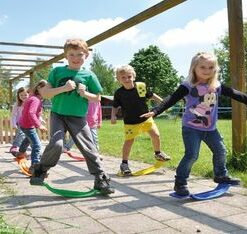
Balance as a sensation rather than an exercise: curved boards, rockers, Bilibo, Dynair cushions. Vestibular and proprioceptive input. → See balance and motor skills
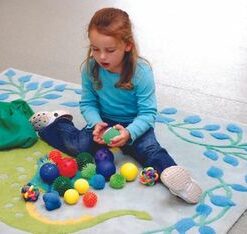
Sensory balls
Textures, weights and sizes for tactile and proprioceptive work. The most versatile item here, and the one most used outside the room. → See sensory balls
Vibrating cushions
Vibration for regulation and deep proprioceptive input. Few products, heavily in demand. → See vibrating cushions
Multisensory room, Snoezelen and calm corner
They aren't the same thing, even though they share equipment.
A Snoezelen room is a dedicated, darkened space with projection, fibre optics and sound, designed for controlled stimulation and deep relaxation. It needs a whole room and a significant budget.
A multisensory classroom is the school version and more flexible: built as corners inside a room that's used for other things too.
A calm corner is the smallest: a regulation space with two or three items, which fits in any classroom.
You can start with the third and grow. All three draw on much of the same catalogue.
Quotes for schools and centres
If you're building a full room, write to us with the space you have and the profile of the pupils. We'll prepare a quote with an invoice, and we can fit the selection to the budget available rather than sending you a whole catalogue.
Frequently asked questions
Where do you start when building a multisensory room?
By knowing who it's for. A group with hypersensitivity — needing less input, soft light and deep pressure material — is not the same as a group with hyposensitivity, which needs intensity, vibration and movement. Buying before settling that is what fills storerooms with equipment nobody uses.
Is it only for autism?
No, though that's the most common profile. It's also used in intellectual disability, cerebral palsy, dementia in day centres and early intervention. Profile-specific material is under ASD and intellectual disability.
How is this different from sensory toys?
The difference is in use: here it's organised by sensory system and with a therapeutic rationale. For the same kind of product framed as a toy, see sensory stimulation toys.