




Animals and surroundings
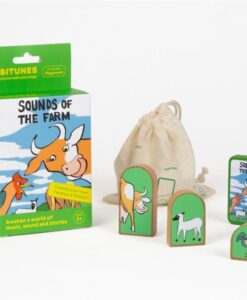
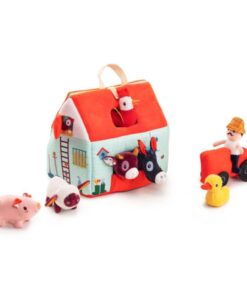
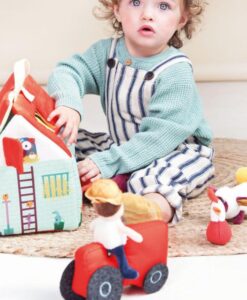
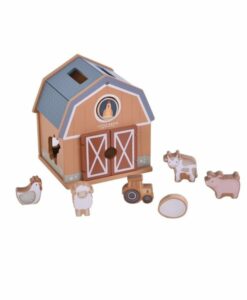
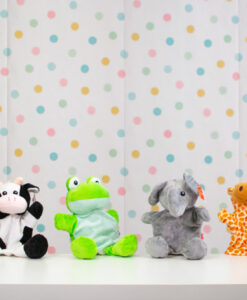
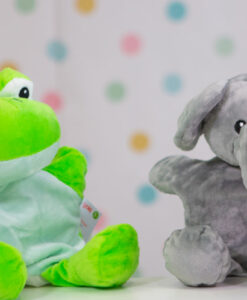
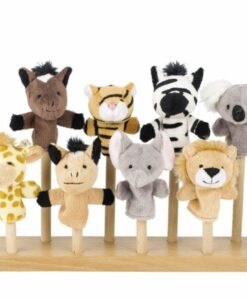
Hand puppet – Animals
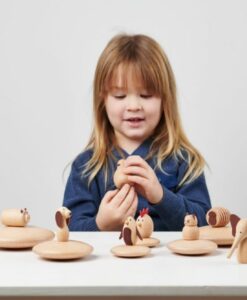
Animals are by some distance the favourite subject of young children. That sounds like a footnote, but it has a very practical consequence: when the material is about animals, children talk more, stay engaged longer and join in without needing persuading.
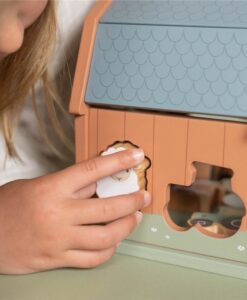
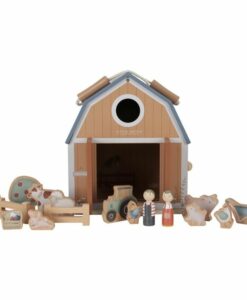
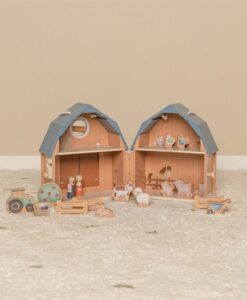
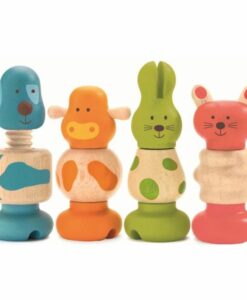
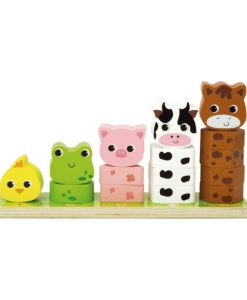
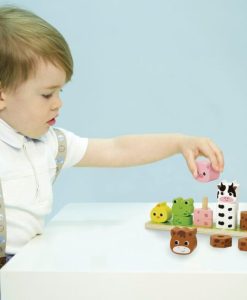
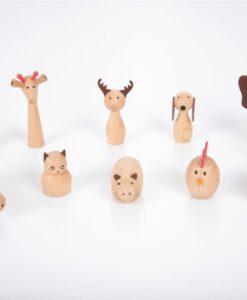
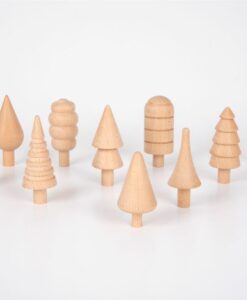
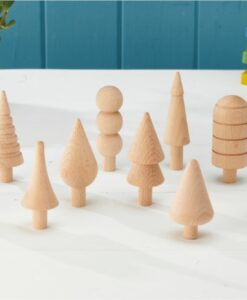
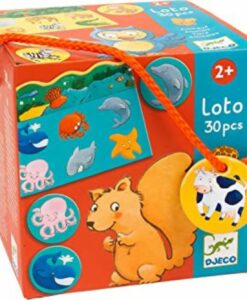
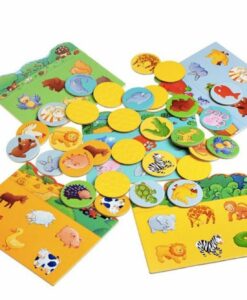
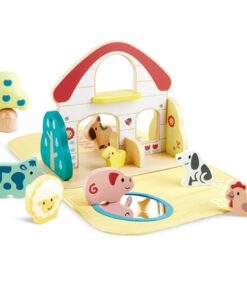
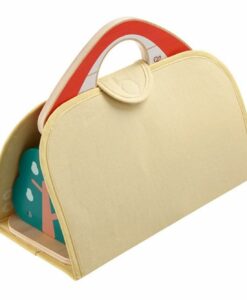
Here you’ll find wooden farms with their animals, loose animal sets, woodland trees and elements, shape sorters, animal lotto games, and hand and finger puppets.
It is part of pretend and imitation play and pairs beautifully with small world play.
Why animals work so well for language
- Animal sounds. Moo, baa, cock-a-doodle-doo. These are the first "words" a child produces because they're easy to articulate and highly rewarding. For children who aren't yet talking, the animal is the way in.
- Clearly structured vocabulary. Category (animal), subcategory (farm, woodland, sea), attributes (big, furry, horned) and parts (paw, tail, beak).
- Verbs. Runs, jumps, flies, swims, eats, sleeps. Animals do things, and that produces verbs without forcing them.
- Comparing and sorting. Those that fly and those that don't, those that live in water, big ones and small ones.
Puppets: the most underrated tool
A finger puppet costs very little and does something no other material manages: the puppet speaks, not the child. That difference changes everything with shy children, children with selective mutism, or those who freeze when asked directly. Plenty of children who won't answer an adult will answer a fabric rabbit.
In therapy they're also used to model: the puppet gets it wrong and the child corrects it, which flips the roles and puts the child in the expert seat. And for turn-taking, because the puppet waits, interrupts or stays quiet as needed.
At home, the advantage is that a puppet lets you act out difficult situations — the first day of school, a doctor's appointment — without discussing them head on.
The farm as a complete setting
A farm isn't a toy, it's a setting: a defined space, characters with their own roles, routines — feeding, milking, shutting the gate — and room for anything to happen. That's why it survives years of play while the story gets more complex.
From 18 months to 3 the play is mostly handling and naming. From 3 to 5 narrative appears: the horse escapes and has to be found. Beyond 5 the story turns social. Same material, three different games.
Frequently asked questions about toy animals and farms
What age is a toy farm for?
From 18-24 months with large animals, coinciding with the start of pretend play. Heaviest use lands between 3 and 5, when children build whole storylines with the characters.
Why wooden animals rather than plastic?
Weight and feel: wood has heft, you notice it in the hand, and it carries sensory information plastic doesn't. It's also usually plainer, leaving more room for imagination. That said, washable plastic has real advantages in clinic.
What are finger puppets for in speech therapy?
They let the child speak through a character rather than as themselves, which lowers the pressure enormously. They're used with shyness and selective mutism, for conversational turn-taking, and for modelling sentences.
Are they useful for children who aren't talking yet?
Very much so. Animal sounds are simple, highly motivating productions and typically appear before words. Naming the animal's sound, waiting, and celebrating any approximation is one of the most effective early language strategies there is.