




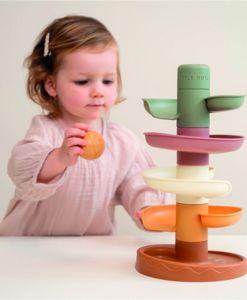
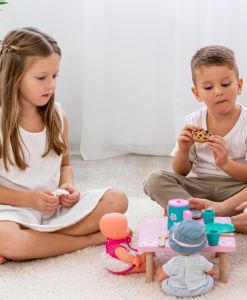
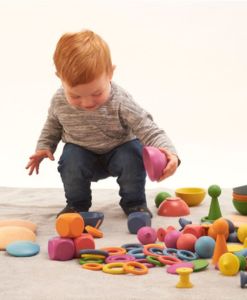
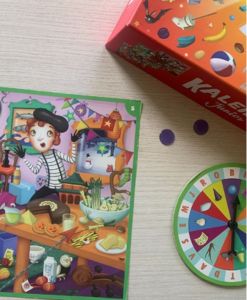

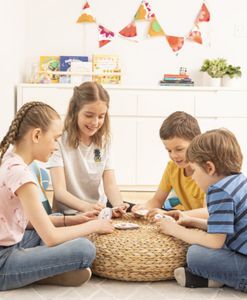
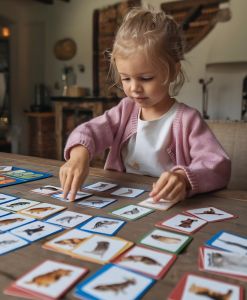
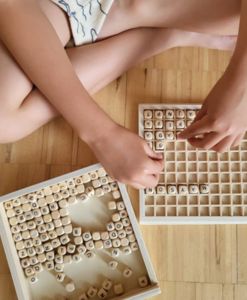
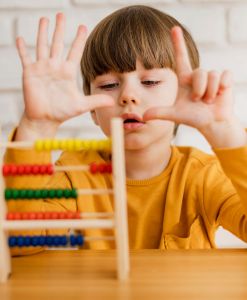
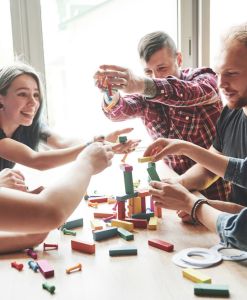
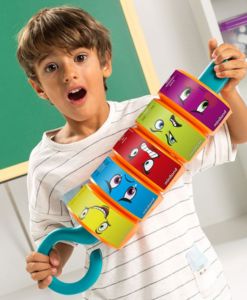
Each type of play develops something different in the child: symbolic play boosts language, heuristic play boosts exploration, motor play boosts coordination, and so on. Classifying toys by type of play helps you choose the right resource for what you want to work on.
At logopedicum we organise our educational games by type of play so you can quickly find what you need: from cause-and-effect play to cooperative play, through creativity, language, logic or memory. Materials selected with a therapeutic and educational eye.
It is part of educational games and toys. Explore each type of play to discover what it develops and which materials fit best.
Why classify toys by type of play
Play is the main learning tool in childhood, but not all play works on the same thing. Organising by type of play — rather than only by age or theme — lets you start from a goal (language, motor skills, attention, emotions, logic) and reach the material that best develops it. It is how speech therapists, occupational therapists and teachers think when preparing a session or a corner.
Types of play you will find
A quick guide to the main types and what they boost:
- Symbolic and imitation play: language, imagination and social skills.
- Heuristic play: free exploration and autonomy.
- Motor skills games: fine and gross coordination.
- Logic and math games: reasoning and logical thinking.
- And more: creativity, language, attention and concentration, memory, reading and writing, cause and effect, cooperative and emotional education.
How to choose the right type of play
Start from the goal: do you want to work on language, motor skills, attention, emotions or logic? Then choose the type of play that best develops it and, within it, the material suited to the child's age and stage. At home, in the classroom or in therapy, this classification makes it easier to build purposeful play.
Frequently asked questions about types of play
What types of play are there?
The main ones include: symbolic and imitation play, heuristic play, motor skills games, creativity, language, attention and concentration, memory, reading and writing, logic and math, cause and effect, cooperative and emotional education. Each develops different skills.
How do I choose the type of play for what I want to work on?
Start from the goal (language, motor skills, attention, emotions, logic) and choose the type of play that develops it; then match the material to the child's age and level. Combining several types gives more complete work.
Is "type of play" the same as "type of toy"?
No: type of play classifies by the way of playing and what it develops (symbolic, heuristic, motor…), while type of toy classifies by the object (puzzles, soft toys, board games…). They are two complementary ways to find the ideal resource.